Terry & Nancy's Ancestors
Family History Section
Person Page 186
Thomas Herbert Elliott1,2,3
#1853, (1834 - 1933)
Parents
| Father | William Henry Elliott (13 May 1805 - 2 Jan 1895) |
| Mother | Frances Elizabeth Hill (1 Dec 1812 - 11 Mar 1896) |
| Chart Membership | Descendants of David Dutt/Toot Descendants of Dr. Davis Green Tuck |
| Family Indexes | The Dutt/Toot Family The Tuck Family |
Key Events:
Marriage: 9 Apr 1856, Christian Co., Kentucky, Elizabeth Mariah Tuck (b. 30 Nov 1837, d. 16 Apr 1904)7,8,5
Copyright Notice
The material on this website is subject to copyright.
Facts – names, dates, and places – cannot be copyrighted; you are free to copy them.
But the narratives are my creative work product and are copyrighted. You may copy them for your personal use, but please respect my copyright and do not republish them in any form, including copying them to your tree on Ancestry or elsewhere, unless you have obtained written permission from me.
Many of the images are also copyrighted, and may not be copied without the consent of the copyright holders.
Narrative:
Thomas Herbert Elliott was born on 3 Aug 1834 in Warren Co., MississippiG.4,5,6
He moved to Montgomery Co., TennesseeG, with his parents Before 1840. He was probably the male age 5 to 10 listed in the household of his father, William Henry Elliott, in the 1840 Federal Census of Montgomery Co., TennesseeG.15 He appeared on the 1850 Federal Census of Montgomery Co., TennesseeG, in the household of his parents.16,17
Thomas married first Elizabeth Mariah Tuck, daughter of Dr. Davis Green Tuck and Elizabeth M. Toot, on 9 Apr 1856 in Christian Co., KentuckyG.7,8,5
Thomas and Elizabeth appeared on the 1860 Federal Census of Hopkinsville, Christian Co., KentuckyG, enumerated 15 Aug 1860, reporting real estate valued at $10,000, personal estate of $10,000 and 11 slaves in 3 slave houses. Their children Quintus and Sarah were listed as living with them.18,19 Thomas bought 350½ acres on little west fork Red River near the Tuck farm in Christian Co.G from his father in Sep 1861, for $5 "and the affection he has for his son."20
Thomas then purchased additional land nearby, part of the Cooper estate, in a series of transactions. He purchased 180 acres on 28 Jul 1862. In a second deed of the same date he purchased one acre, for $42.25. Then, on 27 Feb 1864 he purchased an additional 120 acres next to his existing property, for $42.25 per acre.21 On 9 Nov 1867 Thomas purchased 45 acres from estate of Thomas Joiner from his daughter Elizabeth and her husband, Jazon Ezell, for $1,500.22
Thomas was named an executor, jointlly with his brother-in-law, Richard Watson Tuck, in the will of Dr. Davis Green Tuck, his wife's father, dated 25 Mar 1861.23
Thomas became the guardian of his wife's younger sister, Virginia A. Tuck, following the death of her father.24
On 5 Sep 1867 Thomas accepted a two-part mortgage from his brother-in-law, Richard Watson Tuck. Richard mortgaged his interest in his father's estate in exchange for Thomas acting as security for a note for $3,094 to Mathen Downey, and he mortgaged all his property in Christian Co. as security for a note for $739 to Thomas.25 Richard filed for bankruptcy on 26 Feb 1868, and on 16 Nov 1868 W. D. Ritter, assignee under bankruptcy, transferred Richard's interest in his father's estate to Thomas and his neighbor Permelia S. Walton. No details were provided as to why the transfer was made. For reasons not now clear, on 8 Mar 1893 Thomas paid Richard and his wife $385 for a quit claim deed to ratify this transaction.26
On 16 Nov 1868 Thomas bought his brother-in-law Adam Paul Tuck's share of his father's estate at his bankruptcy sale on the courthouse steps in Memphis.27,28 Thomas sold half of that interest to Permelia S. Walton on 9 Aug 1869, for $2,250.29
On 12 Aug 1874, Thomas bought from Virginia A. Tuck, now his former ward, her interest in her father's estate, for $3,100.30
With Thomas and Permelia S. Walton now each owning half of the rights to the Dr. Davis Green Tuck estate, and his widow having died, they had commissioners appointed to divide the property, according to value. The Commissioners decided the property should be divided by a north-south line into a parcel of 517½ acres on east and one of 457½ acres on west. On 27 Aug 1874 they executed a deed in which he took the west part, nearest his existing property, and she took the east part, nearest her property. A second deed was required 19 Feb 1880 to correct an omission in the first.31
Thomas and Elizabeth, and their children Quintus, William, Walter, Pauline, and Josephine, appeared on the 1870 Federal Census of Hopkinsville, Christian Co., KentuckyG, in the household of her mother Elizabeth M. Toot. He reported real estate valued at $19,000 and personal estate of $2,000.32
Thomas and Elizabeth appeared on the 1880 Federal Census of Lafayette, Christian Co., Kentucky G, enumerated 5 Jun 1880. Their children William, Walter, Pauline, and Josephine were listed as living with them.33
Thomas was named an executor in the will of Dr. Davis Green Tuck, his wife's father, dated 25 Mar 1861.23 He was also was named an executor in the will of his brother-in-law, Quintus C. Atkinson, dated 7 Jan 1864 in Shelby Co., TennesseeG.34
Thomas became the guardian of his wife's younger sister, Virginia A. Tuck, receiving $4,500 from her father's estate 18 Apr 1868, and $2,000 from her mother 1 Apr 1869, and an additional $1,500 from her 1 Jun 1870. He purchased four $1,000 US bonds for her account, paying premium and expenses of $379.50, and two more 1 Sep 1896, at a cost of $415.50. Virtually all the remaining cash was used for other expenses, and cash payments to her of $555.24
He was named in the will of his wife's sister, Sarah Elizabeth Tuck, dated 22 Jul 1882, to act as trustee for her bequest of $1,000 to her niece Lulie May Tuck, until the girl married or achieved age 21.35,36 Nevertheless, he and his wife joined with a number of her siblings, their spouses, and the children of her deceased sister, in filing a contest to the will, on 20 Oct 1883.37
Thomas bought two parcels totaling about 520 acres in Christian Co.G from the estate of Elizabeth John A. Smith, widow of his wife's brother Henry under an order in her probate dated 7 Dec 1889, for $11,401.94. Her grandson, Davis Henry Tuck, never received the share due him. When his guardian was appointed he sued Thomas for the balance supposedly due the child. Thomas responded that the sale of his share of the land remaining after payment of her debts should not have been allowed, and that part of the sale was void. The guardian prevailed in the lower court, but Thomas appealed successfully, in a complex split decision taking 25 pages when printed. The case was sent back to the lower to resolve the details, the result if which have not been found.38,39
He became guardian of his wife's nephew, Dr. Robert Linah Cobb Jr., after the death of the child's father in 1895. A total of $19,000 was deposited with Thomas between 30 Aug and 15 Oct 1895. With interest earned of $8,217, less expenses of $8,224, Robert received $18,993 when he achieved age 21 on 27 Apr 1903.40,41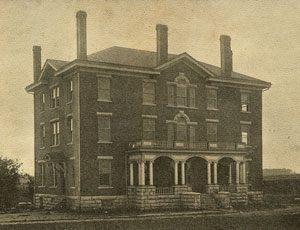
After the opening of Vanderbilt University in 1875, the Methodist Episcopal Church, South, under whose auspices it then operated, saw the need to establish training schools to prepare boys to enter the university. Three such schools were established by the Church's Louisville Conference. The one at Elkton, KentuckyG, opened 16 Sep 1892 in rented quarters, with 19 students. A new building was completed the following year. Thomas was an active supporter; his presumably substantial donations resulted in two buildings being named for his deceased children. Josephine Elliott Hall, built between 1903 and 1908, was the first dormitory. Walter Elliott Hall, built between 1909 and 1916, had a gymnasium on the ground floor and dormitories on the upper floors. Walter Elliott Hall continued in use into the 1980's.42,43,44,45
After the separation of Vanderbilt University from the Church, the name of the school was changed to John Locke School, after the English philosopher. About 1922 the Church decided to elevate the school to a junior college, and renamed it Morton-Elliott Junior College, "honoring the original founders and benefactors." The school closed in 1924 and the site was acquired by the county and used for a public school.46,47,48
Thomas and Elizabeth appeared on the 1900 Federal Census of Christian Co., Kentucky G, enumerated 25 Jun 1900. Their son Quintus was listed as living with them, as was his wife, Emma Jane Cooper, and Elizabeth's nephew, Robert Linah Cobb.49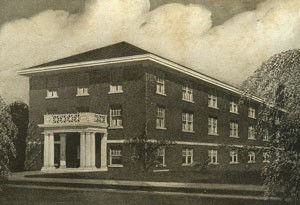
His wife died on 16 Apr 1904 in Christian Co., KentuckyG.50,12
Thomas appeared on the 1910 Federal Census of Christian Co., Kentucky G, in the household of his son Quintus and his wife, Emma Jane Cooper.51
According to a newspaper report Thomas and Adeline Ledbetter "eloped" to St. LouisG to be married, with him at age 75 and her 65. He was described as a "millionaire tobacco grower" and "rich banker and tobacco planter." She was described as worth more than $1,000,000 and "owns half the town of Murfreesboro, Tenn." It was reported that they had been sweethearts for 15 years.52 Before their marriage, they signed an "Ante Nuptual Contract" in which they each waived any claim on the other's property during or after the marriage or at the death of the other.53
Thomas married second Adeline Ledbetter, daughter of William Ledbetter and Eliza Adeline Wellborn, on 27 Apr 1910 in St. Louis, MissouriG, at the home of her niece, Mrs. J. E. Graves, with Rev. Dr. C. C. Wood, assoicate editor of the Christian Advocate officiating.9,10
Thomas and Adeline appeared on the 1920 Federal Census of Lafayette, Christian Co., Kentucky, at Lafayette Rd. G, enumerated 9 Mar 1920, reporting that they owned their farm, mortgage free.54
His second wife died on 19 Oct 1924 in Nashville, Davidson Co., TennesseeG.55,56,57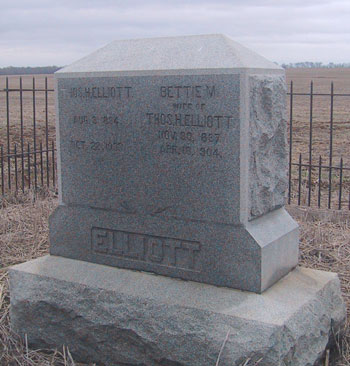
Thomas appeared on the 1930 Federal Census of Christian Co., Kentucky G, enumerated 18 Apr 1930, reporting that he owned his farm, valued at $20,000. His son Quintus was listed as living with him, and his wife, Emma Jane Cooper.58
He was a farmer, apparently on a substantial scale.59,60,61 He was also one of the most substantial businessman in the county. He was one of the founders of the Bank of Lafayette, established 1 Jul 1898, where his son Quint was president for over 30 years.62 It appears he tried to retire by 1900, at age 65, and turn the farm over to his son, Quintus. Thomas reported his occupation as landlord and Quint, living in the same dwelling, was listed as a farmer renting his farm. In 1910 Quint was shown as the farmer, owning the farm, with his father living in his household, reporting his occupation as "own income."63,64 But the situation had changed by 1920. Thomas had remarried, and Quint cannot be found. Thomas was shown as a farm owner. In 1930 Thomas was shown as a farmer, and Quint is again living in the household, now listed as a farm manager, and an employee, presumably of his father.65,66
Thomas died on 22 Oct 1933 in Nashville, Davidson Co., TennesseeG, at age 99.11,12 He was buried on 23 Oct 1933 in the Tuck-Elliott Family Cemetery, Lafayette, Christian Co., KentuckyG.13,14
He moved to Montgomery Co., TennesseeG, with his parents Before 1840. He was probably the male age 5 to 10 listed in the household of his father, William Henry Elliott, in the 1840 Federal Census of Montgomery Co., TennesseeG.15 He appeared on the 1850 Federal Census of Montgomery Co., TennesseeG, in the household of his parents.16,17
Thomas married first Elizabeth Mariah Tuck, daughter of Dr. Davis Green Tuck and Elizabeth M. Toot, on 9 Apr 1856 in Christian Co., KentuckyG.7,8,5
Thomas and Elizabeth appeared on the 1860 Federal Census of Hopkinsville, Christian Co., KentuckyG, enumerated 15 Aug 1860, reporting real estate valued at $10,000, personal estate of $10,000 and 11 slaves in 3 slave houses. Their children Quintus and Sarah were listed as living with them.18,19 Thomas bought 350½ acres on little west fork Red River near the Tuck farm in Christian Co.G from his father in Sep 1861, for $5 "and the affection he has for his son."20
Thomas then purchased additional land nearby, part of the Cooper estate, in a series of transactions. He purchased 180 acres on 28 Jul 1862. In a second deed of the same date he purchased one acre, for $42.25. Then, on 27 Feb 1864 he purchased an additional 120 acres next to his existing property, for $42.25 per acre.21 On 9 Nov 1867 Thomas purchased 45 acres from estate of Thomas Joiner from his daughter Elizabeth and her husband, Jazon Ezell, for $1,500.22
Managing the Tuck Estate --- Text Stolen from ReigelRidge.com !! ---
Thomas was named an executor, jointlly with his brother-in-law, Richard Watson Tuck, in the will of Dr. Davis Green Tuck, his wife's father, dated 25 Mar 1861.23
Thomas became the guardian of his wife's younger sister, Virginia A. Tuck, following the death of her father.24
On 5 Sep 1867 Thomas accepted a two-part mortgage from his brother-in-law, Richard Watson Tuck. Richard mortgaged his interest in his father's estate in exchange for Thomas acting as security for a note for $3,094 to Mathen Downey, and he mortgaged all his property in Christian Co. as security for a note for $739 to Thomas.25 Richard filed for bankruptcy on 26 Feb 1868, and on 16 Nov 1868 W. D. Ritter, assignee under bankruptcy, transferred Richard's interest in his father's estate to Thomas and his neighbor Permelia S. Walton. No details were provided as to why the transfer was made. For reasons not now clear, on 8 Mar 1893 Thomas paid Richard and his wife $385 for a quit claim deed to ratify this transaction.26
On 16 Nov 1868 Thomas bought his brother-in-law Adam Paul Tuck's share of his father's estate at his bankruptcy sale on the courthouse steps in Memphis.27,28 Thomas sold half of that interest to Permelia S. Walton on 9 Aug 1869, for $2,250.29
On 12 Aug 1874, Thomas bought from Virginia A. Tuck, now his former ward, her interest in her father's estate, for $3,100.30
With Thomas and Permelia S. Walton now each owning half of the rights to the Dr. Davis Green Tuck estate, and his widow having died, they had commissioners appointed to divide the property, according to value. The Commissioners decided the property should be divided by a north-south line into a parcel of 517½ acres on east and one of 457½ acres on west. On 27 Aug 1874 they executed a deed in which he took the west part, nearest his existing property, and she took the east part, nearest her property. A second deed was required 19 Feb 1880 to correct an omission in the first.31
Thomas and Elizabeth, and their children Quintus, William, Walter, Pauline, and Josephine, appeared on the 1870 Federal Census of Hopkinsville, Christian Co., KentuckyG, in the household of her mother Elizabeth M. Toot. He reported real estate valued at $19,000 and personal estate of $2,000.32
Thomas and Elizabeth appeared on the 1880 Federal Census of Lafayette, Christian Co., Kentucky G, enumerated 5 Jun 1880. Their children William, Walter, Pauline, and Josephine were listed as living with them.33
The Perennial Trustee --- Text Stolen from ReigelRidge.com !! ---
Thomas was named an executor in the will of Dr. Davis Green Tuck, his wife's father, dated 25 Mar 1861.23 He was also was named an executor in the will of his brother-in-law, Quintus C. Atkinson, dated 7 Jan 1864 in Shelby Co., TennesseeG.34
Thomas became the guardian of his wife's younger sister, Virginia A. Tuck, receiving $4,500 from her father's estate 18 Apr 1868, and $2,000 from her mother 1 Apr 1869, and an additional $1,500 from her 1 Jun 1870. He purchased four $1,000 US bonds for her account, paying premium and expenses of $379.50, and two more 1 Sep 1896, at a cost of $415.50. Virtually all the remaining cash was used for other expenses, and cash payments to her of $555.24
He was named in the will of his wife's sister, Sarah Elizabeth Tuck, dated 22 Jul 1882, to act as trustee for her bequest of $1,000 to her niece Lulie May Tuck, until the girl married or achieved age 21.35,36 Nevertheless, he and his wife joined with a number of her siblings, their spouses, and the children of her deceased sister, in filing a contest to the will, on 20 Oct 1883.37
Thomas bought two parcels totaling about 520 acres in Christian Co.G from the estate of Elizabeth John A. Smith, widow of his wife's brother Henry under an order in her probate dated 7 Dec 1889, for $11,401.94. Her grandson, Davis Henry Tuck, never received the share due him. When his guardian was appointed he sued Thomas for the balance supposedly due the child. Thomas responded that the sale of his share of the land remaining after payment of her debts should not have been allowed, and that part of the sale was void. The guardian prevailed in the lower court, but Thomas appealed successfully, in a complex split decision taking 25 pages when printed. The case was sent back to the lower to resolve the details, the result if which have not been found.38,39
He became guardian of his wife's nephew, Dr. Robert Linah Cobb Jr., after the death of the child's father in 1895. A total of $19,000 was deposited with Thomas between 30 Aug and 15 Oct 1895. With interest earned of $8,217, less expenses of $8,224, Robert received $18,993 when he achieved age 21 on 27 Apr 1903.40,41
Supporting Education --- Text Stolen from ReigelRidge.com !! ---
Josephine Elliott Hall, Vanderbilt Training School
photo courtesy Gary Violette
photo courtesy Gary Violette
After the opening of Vanderbilt University in 1875, the Methodist Episcopal Church, South, under whose auspices it then operated, saw the need to establish training schools to prepare boys to enter the university. Three such schools were established by the Church's Louisville Conference. The one at Elkton, KentuckyG, opened 16 Sep 1892 in rented quarters, with 19 students. A new building was completed the following year. Thomas was an active supporter; his presumably substantial donations resulted in two buildings being named for his deceased children. Josephine Elliott Hall, built between 1903 and 1908, was the first dormitory. Walter Elliott Hall, built between 1909 and 1916, had a gymnasium on the ground floor and dormitories on the upper floors. Walter Elliott Hall continued in use into the 1980's.42,43,44,45
After the separation of Vanderbilt University from the Church, the name of the school was changed to John Locke School, after the English philosopher. About 1922 the Church decided to elevate the school to a junior college, and renamed it Morton-Elliott Junior College, "honoring the original founders and benefactors." The school closed in 1924 and the site was acquired by the county and used for a public school.46,47,48
Thomas and Elizabeth appeared on the 1900 Federal Census of Christian Co., Kentucky G, enumerated 25 Jun 1900. Their son Quintus was listed as living with them, as was his wife, Emma Jane Cooper, and Elizabeth's nephew, Robert Linah Cobb.49
Walter Elliott Hall, Vanderbilt Training School
photo courtesy Gary Violette
photo courtesy Gary Violette
His wife died on 16 Apr 1904 in Christian Co., KentuckyG.50,12
Thomas appeared on the 1910 Federal Census of Christian Co., Kentucky G, in the household of his son Quintus and his wife, Emma Jane Cooper.51
Eloping at Age 75 --- Text Stolen from ReigelRidge.com !! ---
According to a newspaper report Thomas and Adeline Ledbetter "eloped" to St. LouisG to be married, with him at age 75 and her 65. He was described as a "millionaire tobacco grower" and "rich banker and tobacco planter." She was described as worth more than $1,000,000 and "owns half the town of Murfreesboro, Tenn." It was reported that they had been sweethearts for 15 years.52 Before their marriage, they signed an "Ante Nuptual Contract" in which they each waived any claim on the other's property during or after the marriage or at the death of the other.53
Thomas married second Adeline Ledbetter, daughter of William Ledbetter and Eliza Adeline Wellborn, on 27 Apr 1910 in St. Louis, MissouriG, at the home of her niece, Mrs. J. E. Graves, with Rev. Dr. C. C. Wood, assoicate editor of the Christian Advocate officiating.9,10
Thomas and Adeline appeared on the 1920 Federal Census of Lafayette, Christian Co., Kentucky, at Lafayette Rd. G, enumerated 9 Mar 1920, reporting that they owned their farm, mortgage free.54
His second wife died on 19 Oct 1924 in Nashville, Davidson Co., TennesseeG.55,56,57
Thomas and Bettie's tombstone
photo by authors
photo by authors
Thomas appeared on the 1930 Federal Census of Christian Co., Kentucky G, enumerated 18 Apr 1930, reporting that he owned his farm, valued at $20,000. His son Quintus was listed as living with him, and his wife, Emma Jane Cooper.58
A Planter and Business Man --- Text Stolen from ReigelRidge.com !! ---
He was a farmer, apparently on a substantial scale.59,60,61 He was also one of the most substantial businessman in the county. He was one of the founders of the Bank of Lafayette, established 1 Jul 1898, where his son Quint was president for over 30 years.62 It appears he tried to retire by 1900, at age 65, and turn the farm over to his son, Quintus. Thomas reported his occupation as landlord and Quint, living in the same dwelling, was listed as a farmer renting his farm. In 1910 Quint was shown as the farmer, owning the farm, with his father living in his household, reporting his occupation as "own income."63,64 But the situation had changed by 1920. Thomas had remarried, and Quint cannot be found. Thomas was shown as a farm owner. In 1930 Thomas was shown as a farmer, and Quint is again living in the household, now listed as a farm manager, and an employee, presumably of his father.65,66
Thomas died on 22 Oct 1933 in Nashville, Davidson Co., TennesseeG, at age 99.11,12 He was buried on 23 Oct 1933 in the Tuck-Elliott Family Cemetery, Lafayette, Christian Co., KentuckyG.13,14
Children:
Children with Elizabeth Mariah Tuck:
- Quintus Atkinson Elliott (5 Jun 1857 - 15 Jun 1940)
- Sarah T. Elliott (3 Nov 1858 - 1860)
- William Davis Elliott+ (4 Jul 1859 - 17 Mar 1924)
- Walter T. Elliott (27 Apr 1863 - 6 Oct 1888)
- infant son Elliott (27 Apr 1863 - 27 Apr 1863)
- Pauline Elliott+ (5 Aug 1865 - 13 Apr 1951)
- Josephine Elliott (27 Sep 1868 - 26 Jan 1888)
Children:
There were no children with Adeline Ledbetter
Citations
- [S8728] Saunders, and Stubbs, Elizabeth Saunders Blair, Early Settlers of Alabama, pg 385, shows name as Thomas Herbert Elliott.
- [S2148] Quint Atkinson Elliott, Certificate of Death, shows name as Thos. Herbert Elliott.
- [S1770] Elizabeth M. Tuck household, 1870 U.S. Census, Christian Co., Kentucky, shows name as Thos H. Elliott.
- [S4606] William Eliot household, 1850 U.S. Census, Montgomery Co., Tennessee, shows age 16 and state, as Mississippi.
- [S8728] Saunders, and Stubbs, Elizabeth Saunders Blair, Early Settlers of Alabama, pg 385, shows month, year, county, and state.
- [S4612] Thomas H. Elliott, Certificate of Death, shows date, and state, as Tennessee.
- [S893] "Kentucky Marriages, 1851-1900," Ancestry.com, record for Thomas H. Elliott and Bettie M. Tuck, shows date, county, and state.
- [S2062] Thos. H. Elliott household, 1860 U.S. Census, Christian Co., Kentucky, shows them apparently living as husband and wife.
- [S4560] "Elliottt-Ledbetter," Hopkinsville Kentuckian, 30 Apr 1910, dateline April 27, shows married "tonight," location, and officiant.
- [S2146] Thomas H. Elliott household, 1920 U.S. Census, Christian Co., Kentucky, shows married.
- [S4612] Thomas H. Elliott, Certificate of Death, shows date, city, county, and state.
- [S14011] Thos. H.and Betty M. Elliott tombstone, Tuck-Elliott Family Cemetery, shows date.
- [S4612] Thomas H. Elliott, Certificate of Death, shows date, town, and state.
- [S14011] Thos. H.and Betty M. Elliott tombstone, Tuck-Elliott Family Cemetery.
- [S4609] William H. Elliott household, 1840 U.S. Census, Montgomery Co., Tennessee.
- [S4606] William Eliot household, 1850 U.S. Census, Montgomery Co., Tennessee, value of real estate shown as 18,00.
- [S4610] William Eliott, owner, 1850 U.S. Census, Montgomery Co., Tennessee, slave schedule.
- [S2062] Thos. H. Elliott household, 1860 U.S. Census, Christian Co., Kentucky.
- [S2063] Thos. Elliott, owner, 1860 U.S. Census, Christian Co., Kentucky, slave schedule.
- [S7768] Deeds, Christian Co., Kentucky, 41:318-20, Wm H. Elliott of Montgomery, Tennessee, to son Thos. H. Elliott, 6 May 1862.
- [S7768] Deeds, Christian Co., Kentucky, 41:371-2, Hugh C. Cooper, Ann Fergerson and H. C. Cooper, agents to Thomas H. Elliott, 29 Jul 1862; 41:370-1, Ann Fergerson to Thomas Elliott, same date; and 42:270-2, Ann Fergerson et al to Thomas H. Elliott, 21 Apr 1864.
- [S7768] Deeds, Christian Co., Kentucky, 49:128, Jason Ezell & wife Elizabeth Jane to Thomas H. Elliott, 23 Jul 18723.
- [S2014] Wills, Kentucky, S:105-6, will of D. G. Tuck, 23 Feb 1863.
- [S1199] Christian Co. Guardian Bonds, C:511-2, report of purchase of four bonds; C:596, settlement.
- [S7768] Deeds, Christian Co., Kentucky, 44:479-80, Richard W. Tuck to Thomas H. Elliott, mortgage, 5 Sep 1867.
- [S7768] Deeds, Christian Co., Kentucky, 45:354, W. D. Ritter, assignee of R. W. Tuck to T. H. Elliott and Mrs. P. S. Farrar, 1 Oct 1868; 85:127-8, R. W. Tuck & wife Eliza J. of Shelby Co., Tennessee toThomas H. Elliott, 9 Mar 1893.
- [S4130] "Bankrupt Sale of Real Estate," The Sunday Appeal, 1 Nov 1868, shows property as 100 acres.
- [S7768] Deeds, Christian Co., Kentucky, 46:58-60, William Y. Cirode of Mempis, assignee of A. P. Tuck to T. H. Elliott, 7 Jun 1869.
- [S7768] Deeds, Christian Co., Kentucky, 50:405-6, T. H. Elliott and wife Bettie to Mrs. Permelia S. Farror, 1 Nov 1873.
- [S7768] Deeds, Christian Co., Kentucky, 52:291-2, Jennie A. Tuck to Thomas H. Elliott, 5 Apr 1875.
- [S7768] Deeds, Christian Co., Kentucky, 52:218-9, P. S. Farror and Thos H. Elliott, 1 Mar 1875; and 58:294-5, Mrs. P. S. Farrar and Thos H. Elliott, 21 Feb 1880.
- [S1770] Elizabeth M. Tuck household, 1870 U.S. Census, Christian Co., Kentucky.
- [S1897] Thomas H. Elliott household, 1880 U.S. Census, Christian Co., Kentucky.
- [S1285] Wills, Shelby Co., Tennessee, 4:32-38, Q. C. Atkinson, 1865.
- [S1285] Wills, Shelby Co., Tennessee, 8:289-92, Sarah E. Atkinson, 1882.
- [S1351] Atkinson, Sarah E., Shelby Co. Tennessee loose probate records, petition of John C. Mills as executor, 8 Nov 1882, shows Robert A. Young as "Revd."
- [S1351] Atkinson, Sarah E., Shelby Co. Tennessee loose probate records, bond 20 Oct 1883 by Malcom McNeill, et at, for $250, lists all the petitioners; bond same date for $500, lists petitioners but omits name of Rivers McNeill, apparently in error; Petition filed 20 Oct 1883 by Malcom McNeill, et at, list petitioners and give relationship to Sarah, as well as stating cause of action; response of executors 6 Nov 1883 and 24 Jan 1884 claims no evidence was provided in support and does not provide sufficient grounds; and order of Probate Court 9 Feb 1884 transferring case to Circuit Court to try the validity of the will.
- [S4139] Elliott v. Fowler &c., 19 Dec 1901, Kentucky Court of Appeals.
- [S7768] Deeds, Christian Co., Kentucky, 80:61-4, Hunter Wood, master commissioner to T. H. Elliott, 1 Jan 1891.
- [S1199] Christian Co. Guardian Bonds, 6:23-6, settlement for the period 30 Aug 1895 to 28 Dec 1898, 6:335-8, final settlement 27 Apr 1903.
- [S1685] Thomas Elliott household, 1900 U.S. Census, Christian Co., Kentucky, shows Robert living in the household, with his relationship to Thomas as "ward."
- [S3037] Bonifer, "The Founding of Lindsey Wilson College", pg 6, provides background; pg 15, shows opening date and enrolment.
- [S3039] Hoss, David Morton: A Biography, pg 87, shows opening in rented quarters in 1892 and completion of new building in 1893; plate following pg 104, shows main building, Josephine and Walter Elliott Halls (not identified.)
- [S3038] Todd County History Book Committee, Todd County, Kentucky Family History, pg 42, shows Thomas donated a gymnasium in memory of his deceased son.
- [S3040] Violette, "Vanderbilt Training School bldg sequence
," e-mail to author, 12 Apr 2009, identifies the two halls and provides dates of construction; "RE: Vanderbilt Training School Student (follow-up)," 12 Apr 2009, shows use of building by county schools; and "RE: Vanderbilt Training Schoo,l" 15 Oct 2010, shows original use of each building. - [S3234] Morton-Elliott Junior College for Boys, Bulletin, 1922, pg 6, describes transition to John Locke and Morton-Elliott schools.
- [S3037] Bonifer, "The Founding of Lindsey Wilson College", pg 23, shows closure date.
- [S3038] Todd County History Book Committee, Todd County, Kentucky Family History, pg 42, shows purchase of site by county.
- [S1685] Thomas Elliott household, 1900 U.S. Census, Christian Co., Kentucky, /6.
- [S1289] Register of Deaths, Commonwealth of Kentucky, 1904, Christian Co., Elliott, Mariah, shows date and county.
- [S1685] Thomas Elliott household, 1900 U.S. Census, Christian Co., Kentucky.
- [S4560] "Elliottt-Ledbetter," Hopkinsville Kentuckian, 30 Apr 1910.
- [S4561] Thos H. Elliott and Adaline Ledbetter, ante nubtial contract.
- [S2146] Thomas H. Elliott household, 1920 U.S. Census, Christian Co., Kentucky, shows age 88 and state.
- [S4614] Adeline Elliott, Certificate of Death, shows date, city, and county.
- [S500] Findagrave.com, online, memorial # 69283237, Adaline Ledbetter Elliott, shows date.
- [S2147] Thomas H. Elliott household, 1930 U.S. Census, Christian Co., Kentucky, shows Thomas as widowed.
- [S2147] Thomas H. Elliott household, 1930 U.S. Census, Christian Co., Kentucky.
- [S2062] Thos. H. Elliott household, 1860 U.S. Census, Christian Co., Kentucky, shows occupation as farmer.
- [S1770] Elizabeth M. Tuck household, 1870 U.S. Census, Christian Co., Kentucky, shows occupation as farmer.
- [S1897] Thomas H. Elliott household, 1880 U.S. Census, Christian Co., Kentucky, shows occupation as farmer.
- [S3309] Western KY History & Genealogy, online, transcription of Charles M. Meacham, A History of Christian County Kentucky, from Oxcart to Airplane (Nashville: Marshall and Bruce, 1930), Chapter XLI, shows bank and the Elliotts' roles.
- [S1685] Thomas Elliott household, 1900 U.S. Census, Christian Co., Kentucky, shows Thomas' occupation as landlord, and Quintus living in the same dwelling as a farmer, renting his farm.
- [S1689] Quint A. Elliott household, 1910 U.S. Census, Christian Co., Kentucky, shows Thomas' occupation as "own income," in Quint's household, and him as a farmer, on his own farm.
- [S2146] Thomas H. Elliott household, 1920 U.S. Census, Christian Co., Kentucky, shows Thomas's occupation as farm owner; Quintus is not found.
- [S2147] Thomas H. Elliott household, 1930 U.S. Census, Christian Co., Kentucky, shows Thomas' occupation as farmer, and an employer, and Quint's as farm manager, and an employee.
Quintus C. Atkinson1,2,3
#1854, (ca. 1810 - 1864)
Parents
| Father | Thomas Walton Atkinson (ca. 1778 - 1862) |
| Mother | Elizabeth Hundley (22 Oct 1783 - ca. 1810) |
| Chart Membership | Descendants of David Dutt/Toot Descendants of Dr. Davis Green Tuck |
| Family Indexes | The Dutt/Toot Family The Tuck Family |
Key Events:
Marriage: 17 Dec 1835, Dickson Co., Tennessee, Arabella C. West (b. ca. 4 Jun 1815, d. 25 Nov 1837)6,7
Marriage: 24 Sep 1842, Christian Co., Kentucky, Sarah Elizabeth Tuck (b. 14 Dec 1818, d. 2 Nov 1882)8,9,10
Copyright Notice
The material on this website is subject to copyright.
Facts – names, dates, and places – cannot be copyrighted; you are free to copy them.
But the narratives are my creative work product and are copyrighted. You may copy them for your personal use, but please respect my copyright and do not republish them in any form, including copying them to your tree on Ancestry or elsewhere, unless you have obtained written permission from me.
Many of the images are also copyrighted, and may not be copied without the consent of the copyright holders.
Narrative:
Quintus C. Atkinson was born Circa 1810 in Clarksville, Montgomery Co., TennesseeG.4,5
He was probably one of the two males under age 10 listed in the household of his father, Thomas Walton Atkinson, in the 1810 Federal Census of Columbia, Adair Co., KentuckyG.16 He was probably one of the two males under age 10 listed in the household of his father in the 1820 Federal Census of Montgomery Co., TennesseeG.17 He was probably the male age 15 to 20 listed in the household of his father in the 1830 Federal Census of Montgomery Co., TennesseeG.18
Quintus married first Arabella C. West, daughter of Robert J. West and Nancy Dortch, on 17 Dec 1835 in Dickson Co., TennesseeG, with Rev. Parrish officiating.6,7
His wife died on 25 Nov 1837.19,20
Just when Quintus moved to MemphisG is not clear. A brief biography written after his death says he moved there in 1836, but that seems to have been in error. When he sold half interest in a lot in Memphis in 1838 he was shown as "of Montgomery Co.21,22 He apparently had business interests in MemphisG before he established a residence there. J. R. Wray, who came to Memphis about 1837, said he managed Quintus' store there, and when Quintus came to town he stayed with Wray.23
Quintus married second Sarah Elizabeth Tuck, daughter of Dr. Davis Green Tuck and Elizabeth M. Toot, on 24 Sep 1842 in Christian Co., KentuckyG, with Rev. Sam B. White officating.8,9,10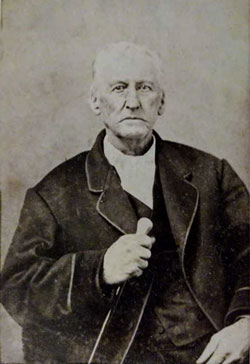
Quintus was issued letters of administration on 6 Jul 1846 in Montgomery Co., TennesseeG, for the estate of his half-brother Joshua, who had died intestate (without leaving a will). Quintus posted a bond of $5,000, with their father and George C. Boyd as surities. In that bond Quintus stated he was a citizen of Montgomery Co.24
Quintus was engaged in a partnership with his first father-in-law, Robert J. West, for "some years" before the partnership was dissolved on 1 Jul 1848. They jointly owned the Sailors Rest Furnace on Yellow Creek in Montgomery Co. and Dickson Forge, formerly Jackson Forge, on Yellow Creek in Dickson Co. Those ventures included about 15,000 acres in some 32 parcels in Montgomery, Dickson, and Stewart Counties, mainly for use as ore beds. There were also 43 slaves, a store, wagons and teams, carts and oxen, cattle and hogs, and a leather-tanning yard. The partnership also owned three lots in Memphis and an agency there for the sale of iron castings and merchandise. That venture included two more slaves. Under the agreement to dissolve the partnership, West kept all the furnace and forge business, including all the land, slaves, livestock, goods on hand, and debts owed the firm. Atkinson kept the Memphis property and business, including stock on hand, the two Negroes, Hastings and Simeon, and debts owed to that business.25
A contemporary biography described Quintus' business abilities in glowing terms, in the fashion of of the period. One says of him "His sagacity was marvelous, industry tireless, and habits of economy remarkable. He accumulated wealth very rapidly." Then it continues to describe his character: "In religious practices he was even more earnest than in pursuits of everyday life. His generosity to the poor and unfortunate, and to the church, was perhaps without parallel in Memphis." At his death he was "especially esteemed and beloved by the Methodist Church, of which he was a devout and active member."26
But it appears that he was not always so religious. Dr. Watson, of the First Methodist Church in Memphis, described his conversion. "While preaching on Christmas day, I observed tears flowing freely down the cheeks of Mr. Q. C. Atkinson. I mentioned it to Brother Trezevant on our way from the Church, and he remarked the he was one of the most wicked men in Memphis." Shortly afterward Atkinson was converted and joined the Church. "He was ever after a zealous, devoted, liberal member of the church, on to the day of his death. He has given more to the Church than any member we ever had." But apparently not without some conflict, as he left the Church for a time after a dispute over pew rentals, and went to Asbury Chapel in South Memphis, despite living on 2nd St. next to First Church.27,28,29
He seems to have regarded himself primarily as a merchant after the partnership with his first father-in-law was dissolved. In an advertisement in the 1850 city directory he describes his business as follows:30,31
Quintus and Sarah appeared on the 1850 Federal Census of Memphis, Shelby Co., TennesseeG, enumerated 4 Sep 1850, apparently living in a hotel kept by James B. Ferguson and his family. Quintus was listed as owner of one male mulatto slave, aged 25 years.35,36
Quintus bought the lot where they were living in Logan Co., KentuckyG, from his sister Elizabeth and her husband, Dr. John E. Trabue, on 12 Jun 1851. It consisted of 4 acres and 60 poles, and he paid $910.37
He purchased the property on Poplar St. Blvd, MemphisG, that would become the family home on 16 Aug 1857, from the estate of William Lawrence. The property totaled about twenty acres, subdivided into various lots. The main house sat on about nine acres fronting on the main street, with ten smaller lots behind of one-third acre or a bit more each, and additional larger lots behind those. The Common Law Court proceeding for the Lawrence estate was later drawn into question, complicated by the papers of that proceeding being lost or mislaid. In 1872 Sarah, then his widow, obtained a quit claim deed from the Lawrence heirs to quiet the title.38,39
Quintus was named executor and an heir in the will of his father, dated 24 Apr 1858. He was to receive an equal share of his father's slaves and other property with his six siblings and half-siblings who were living or had living descendants.40,41
Quintus was appointed administrator of the estate of his wife's eldest brother, Dr. William J. Tuck, in the fall term of the Shelby Co.G county court. Selling of his books, settlement of debts, and collection of amounts due took until 2 Jun 1860.42
Quintus left a will dated 7 Jan 1864, in Shelby Co., TennesseeG, directing first that he be buried in his lot in Elmwood Cemetery, next to his brother-in-law, Dr. William J. Tuck, in a metallic burial case. He appointed his wife as executor, together with her sister's husband Thomas Herbert Elliott of Kentucky, and N. D. Elliott , Marshall S. Brooks, Edgar McDavit, and James Elair of Memphis, asking that his friends take the oath common in such cases, then aid his wife in closing his estate. He then added Robt. W. Clements of Somerville and Jno. W. Farris, and authorized his wife to add more. Saying his friends will think he wants "a great deal of help to do a little business," he notes that some may be unable or unwilling to serve, but hopes "a board of 2 or 3" could always be available. He directs that after the board is organized they should appoint a secretary and decide upon compensation. They are to buy a well-bound 4-quire (a quire is 24 pages) book in which to record each receipt, payment, and sale, and meet every three months, or at least every six, and when all new transactions are to be read.
He left his widow their home on State line road with 20.35 acres and all the furnishings, fixtures, carriages, etc.; the brick store adjoining Madison St. and Front Row; and $10,000. He left $500 each to his half-sisters Sarah Cates and Quintilla C. and to his half-nephew Quintus Cincinnatus Atkinson. He left his sister Elizabeth the house and land where she lived, which she and her husband had previously deeded to him, $3,000, and canceled the debts she owed him. He left her children, Susan, Arabella, Jane, Quintus, Sarah, Charles, and Barbara, $2,000 each, less the amounts some of them owed in his account books, excepting Arabella who received $1,000. He left Thomas W. Mason and David Mason, the sons of his deceased sister Frances, $2,000 each less amounts they owed him, and two of her granddaughters $2,000 spit between them, less amounts owed by their parents to improve their place near Keysburg, Kentucky. Any surplus or shortfall is to be divided between the Trabue and Mason children, unless the executors find the amount left his widow insufficient, in which case additional amounts can be given to her.
He notes that in previous wills he had left bequests to servants, but now feels "restrained by a power I cannot resist" from doing so. He advises his widow to treat kindly those who stay with her, and give them comfort and aid if they become diseased or crippled. He asks his wife, should she die soon after him, to "bear in mind" the children of his two sisters, taking the liberty of "making discrimination among them any that are wasteful, or extravagant." He notes that he is without "cabinett paper" and his health being too poor to go to the city for paper, he has cut pages from a book to write the will. He notes his father's will has not been settled because of "the unsettled state of the country" and directs his friend Joshua Elder and his half-nephew to take to take his place in settling it.3
In Oct 1864 Sarah and Quintus undertook a trip to Montreal, Canada. In Louisville they encountered her sister, Martha, who was there as part of a bridal trip for their brother Richard, and persuaded her to join them. They reached Chicago, where Quintus became ill, developing into pneumonia.43 They were eventually able to return is remains to MemphisG, where he was buried in Feb 1865.44
Quintus died on 7 Nov 1864 in probably, Chicago, IllinoisG, at age ~54.11,12,13 He was buried on 10 Feb 1865 in Elmwood Cemetery, Memphis, Shelby Co., TennesseeG, in his own lot in Chapel Hill section, one of the oldest in the cemetry. The reason for the delay in burial is unknown.14,15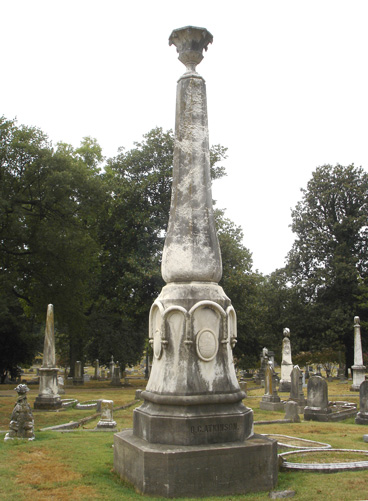
A substantial monument was erected in his lot in Elmwood CemeteryG. It is described as a "costly and tasteful monument" in an 1874 publication by the cemetery, which includes a lithograph of it. Apparently it caused quite a stir when it was erected. A newspaper reported that the 1200-pound block of Italian marble for the base, imported for the project, was hauled past its offices. The public was invited to see the impressive block at the marble yard of Maydewell & Anderson, who were creating the piece. The completed monument was to be twenty-two feet high.45,46,47 (See aerial view.)
His will was filed on 3 Jan 1865 in Shelby Co., TennesseeG. Initially the many executors named in his will declined to serve, except for N. D. Elliott, who was qualified and proceeded to manage the estate. Some time later the widow and Edgar McDavit joined him as executors.48,49 The estate was considerable. A 19-page inventory of claims due the estate totaled over $144,000 in notes from a large number of individuals, as well as corporate and public bonds. A supplemental inventory listed over $50,000 more. By Jan 1866 some $52,000 of that had been collected and most of it disbursed as expenses or to the heirs. Elliott asked the Court to set his compensation at that time, but apparently he never closed the probate. In Sep 1870 the Court ordered him to appear and show why he had not settled the proceedings; the sheriff reported he was not to be found. A second summons in Feb 1873 brought the report that he was then living in Kentucky. A third summons issued in Feb 1876 brought the report that he was dead. Nothing further appears in the file.50
His widow, Sarah, together with Edgar McDavitt and R. W. Clements, all acting as executors, continued to manage his real estate interests for some years. For example, on 10 Apr 1868 they took a mortgage from George Weidt on a lot in South Memphis to secure his note for $3,180. On 4 May 1968 they took a mortgage from Michael Larkin on a lot on Vance and Orleans St. along with 16 mules used in his stables on 2nd St. in Memphis to secure a note for $3,100. On 4 Apr 1866 they obtained a judgment from the Law Court of Memphis for $5,307.20 in favor of the estate, and another on 9 Nov 1866 for $7,218.72. In settlement of those judgments they and others received a lot and brick tenement house in Memphis near the Memphis and Charleston Rail Road depot at Adams & High Sts.51 On 6 Apr 1870 they offered a store house on Front St., or Mississippi Row, in Memphis, at public sale. It was purchased by Matthew Lyddall Bacon, husband of Sarah's sister, for $20,000.52
On 6 Jul 1891 Paul Tuck, brother of Quintus's widow, filed a petition with the Probate Court of Shelby Co., TennesseeG, asking for special letters of administration for Quintus's estate for the purpose of recovering the U. S. Direct tax due the estate. The direct tax had been collected under an act of Congress passed on 5 Aug 1861 designed to raise revenue for the Civil War. It was eventually ruled unconstitutional and an act of Congress approved 2 Mar 1891 provided for reimbursement of the amounts collected. A total of $412.88 was recovered, for which the administrator collected a 10% fee. There is no record of how the proceeds were disbursed.53,54,55
He was probably one of the two males under age 10 listed in the household of his father, Thomas Walton Atkinson, in the 1810 Federal Census of Columbia, Adair Co., KentuckyG.16 He was probably one of the two males under age 10 listed in the household of his father in the 1820 Federal Census of Montgomery Co., TennesseeG.17 He was probably the male age 15 to 20 listed in the household of his father in the 1830 Federal Census of Montgomery Co., TennesseeG.18
Quintus married first Arabella C. West, daughter of Robert J. West and Nancy Dortch, on 17 Dec 1835 in Dickson Co., TennesseeG, with Rev. Parrish officiating.6,7
His wife died on 25 Nov 1837.19,20
In the Iron Business with his First Father-in-Law --- Text Stolen from ReigelRidge.com !! ---
Just when Quintus moved to MemphisG is not clear. A brief biography written after his death says he moved there in 1836, but that seems to have been in error. When he sold half interest in a lot in Memphis in 1838 he was shown as "of Montgomery Co.21,22 He apparently had business interests in MemphisG before he established a residence there. J. R. Wray, who came to Memphis about 1837, said he managed Quintus' store there, and when Quintus came to town he stayed with Wray.23
Quintus married second Sarah Elizabeth Tuck, daughter of Dr. Davis Green Tuck and Elizabeth M. Toot, on 24 Sep 1842 in Christian Co., KentuckyG, with Rev. Sam B. White officating.8,9,10
Quintus C. Atkinson
courtesy Ancestry user "myheritage2378"
courtesy Ancestry user "myheritage2378"
Quintus was issued letters of administration on 6 Jul 1846 in Montgomery Co., TennesseeG, for the estate of his half-brother Joshua, who had died intestate (without leaving a will). Quintus posted a bond of $5,000, with their father and George C. Boyd as surities. In that bond Quintus stated he was a citizen of Montgomery Co.24
Quintus was engaged in a partnership with his first father-in-law, Robert J. West, for "some years" before the partnership was dissolved on 1 Jul 1848. They jointly owned the Sailors Rest Furnace on Yellow Creek in Montgomery Co. and Dickson Forge, formerly Jackson Forge, on Yellow Creek in Dickson Co. Those ventures included about 15,000 acres in some 32 parcels in Montgomery, Dickson, and Stewart Counties, mainly for use as ore beds. There were also 43 slaves, a store, wagons and teams, carts and oxen, cattle and hogs, and a leather-tanning yard. The partnership also owned three lots in Memphis and an agency there for the sale of iron castings and merchandise. That venture included two more slaves. Under the agreement to dissolve the partnership, West kept all the furnace and forge business, including all the land, slaves, livestock, goods on hand, and debts owed the firm. Atkinson kept the Memphis property and business, including stock on hand, the two Negroes, Hastings and Simeon, and debts owed to that business.25
An Able Businessman --- Text Stolen from ReigelRidge.com !! ---
A contemporary biography described Quintus' business abilities in glowing terms, in the fashion of of the period. One says of him "His sagacity was marvelous, industry tireless, and habits of economy remarkable. He accumulated wealth very rapidly." Then it continues to describe his character: "In religious practices he was even more earnest than in pursuits of everyday life. His generosity to the poor and unfortunate, and to the church, was perhaps without parallel in Memphis." At his death he was "especially esteemed and beloved by the Methodist Church, of which he was a devout and active member."26
But it appears that he was not always so religious. Dr. Watson, of the First Methodist Church in Memphis, described his conversion. "While preaching on Christmas day, I observed tears flowing freely down the cheeks of Mr. Q. C. Atkinson. I mentioned it to Brother Trezevant on our way from the Church, and he remarked the he was one of the most wicked men in Memphis." Shortly afterward Atkinson was converted and joined the Church. "He was ever after a zealous, devoted, liberal member of the church, on to the day of his death. He has given more to the Church than any member we ever had." But apparently not without some conflict, as he left the Church for a time after a dispute over pew rentals, and went to Asbury Chapel in South Memphis, despite living on 2nd St. next to First Church.27,28,29
He seems to have regarded himself primarily as a merchant after the partnership with his first father-in-law was dissolved. In an advertisement in the 1850 city directory he describes his business as follows:30,31
Q. C. Atkinson
(Successor to Robert Wells)
No. 56 Front Row, Memphis
Has constantly for sale a large supply
of the best
Cumberland Iron,
Made by Wood, Stacker & Co.
– Also –
Nails, Plantation and Machinery Castings, Blacksmith Tools,
Farming Utensils, Parlor, Office, School and Cook
Stoves, Pig and Bar Lead, Squirrel and Buck
Shot – all of which is offered at
fair prices for cash.
He later became a private banker, and clearly continued to deal in real estate – records have been found for some 15 purchases of lots in Memphis and South Memphis between 1850 and 1858. In the 1859 city directory he was listed as a note broker, still located at 56 Front RowG.32,33,34 (Successor to Robert Wells)
No. 56 Front Row, Memphis
Has constantly for sale a large supply
of the best
Cumberland Iron,
Made by Wood, Stacker & Co.
– Also –
Nails, Plantation and Machinery Castings, Blacksmith Tools,
Farming Utensils, Parlor, Office, School and Cook
Stoves, Pig and Bar Lead, Squirrel and Buck
Shot – all of which is offered at
fair prices for cash.
Quintus and Sarah in Memphis --- Text Stolen from ReigelRidge.com !! ---
Quintus and Sarah appeared on the 1850 Federal Census of Memphis, Shelby Co., TennesseeG, enumerated 4 Sep 1850, apparently living in a hotel kept by James B. Ferguson and his family. Quintus was listed as owner of one male mulatto slave, aged 25 years.35,36
Quintus bought the lot where they were living in Logan Co., KentuckyG, from his sister Elizabeth and her husband, Dr. John E. Trabue, on 12 Jun 1851. It consisted of 4 acres and 60 poles, and he paid $910.37
He purchased the property on Poplar St. Blvd, MemphisG, that would become the family home on 16 Aug 1857, from the estate of William Lawrence. The property totaled about twenty acres, subdivided into various lots. The main house sat on about nine acres fronting on the main street, with ten smaller lots behind of one-third acre or a bit more each, and additional larger lots behind those. The Common Law Court proceeding for the Lawrence estate was later drawn into question, complicated by the papers of that proceeding being lost or mislaid. In 1872 Sarah, then his widow, obtained a quit claim deed from the Lawrence heirs to quiet the title.38,39
Quintus was named executor and an heir in the will of his father, dated 24 Apr 1858. He was to receive an equal share of his father's slaves and other property with his six siblings and half-siblings who were living or had living descendants.40,41
Quintus was appointed administrator of the estate of his wife's eldest brother, Dr. William J. Tuck, in the fall term of the Shelby Co.G county court. Selling of his books, settlement of debts, and collection of amounts due took until 2 Jun 1860.42
A Very Detailed Will --- Text Stolen from ReigelRidge.com !! ---
Quintus left a will dated 7 Jan 1864, in Shelby Co., TennesseeG, directing first that he be buried in his lot in Elmwood Cemetery, next to his brother-in-law, Dr. William J. Tuck, in a metallic burial case. He appointed his wife as executor, together with her sister's husband Thomas Herbert Elliott of Kentucky, and N. D. Elliott , Marshall S. Brooks, Edgar McDavit, and James Elair of Memphis, asking that his friends take the oath common in such cases, then aid his wife in closing his estate. He then added Robt. W. Clements of Somerville and Jno. W. Farris, and authorized his wife to add more. Saying his friends will think he wants "a great deal of help to do a little business," he notes that some may be unable or unwilling to serve, but hopes "a board of 2 or 3" could always be available. He directs that after the board is organized they should appoint a secretary and decide upon compensation. They are to buy a well-bound 4-quire (a quire is 24 pages) book in which to record each receipt, payment, and sale, and meet every three months, or at least every six, and when all new transactions are to be read.
He left his widow their home on State line road with 20.35 acres and all the furnishings, fixtures, carriages, etc.; the brick store adjoining Madison St. and Front Row; and $10,000. He left $500 each to his half-sisters Sarah Cates and Quintilla C. and to his half-nephew Quintus Cincinnatus Atkinson. He left his sister Elizabeth the house and land where she lived, which she and her husband had previously deeded to him, $3,000, and canceled the debts she owed him. He left her children, Susan, Arabella, Jane, Quintus, Sarah, Charles, and Barbara, $2,000 each, less the amounts some of them owed in his account books, excepting Arabella who received $1,000. He left Thomas W. Mason and David Mason, the sons of his deceased sister Frances, $2,000 each less amounts they owed him, and two of her granddaughters $2,000 spit between them, less amounts owed by their parents to improve their place near Keysburg, Kentucky. Any surplus or shortfall is to be divided between the Trabue and Mason children, unless the executors find the amount left his widow insufficient, in which case additional amounts can be given to her.
He notes that in previous wills he had left bequests to servants, but now feels "restrained by a power I cannot resist" from doing so. He advises his widow to treat kindly those who stay with her, and give them comfort and aid if they become diseased or crippled. He asks his wife, should she die soon after him, to "bear in mind" the children of his two sisters, taking the liberty of "making discrimination among them any that are wasteful, or extravagant." He notes that he is without "cabinett paper" and his health being too poor to go to the city for paper, he has cut pages from a book to write the will. He notes his father's will has not been settled because of "the unsettled state of the country" and directs his friend Joshua Elder and his half-nephew to take to take his place in settling it.3
The Fatal Trip to Montreal --- Text Stolen from ReigelRidge.com !! ---
In Oct 1864 Sarah and Quintus undertook a trip to Montreal, Canada. In Louisville they encountered her sister, Martha, who was there as part of a bridal trip for their brother Richard, and persuaded her to join them. They reached Chicago, where Quintus became ill, developing into pneumonia.43 They were eventually able to return is remains to MemphisG, where he was buried in Feb 1865.44
Quintus died on 7 Nov 1864 in probably, Chicago, IllinoisG, at age ~54.11,12,13 He was buried on 10 Feb 1865 in Elmwood Cemetery, Memphis, Shelby Co., TennesseeG, in his own lot in Chapel Hill section, one of the oldest in the cemetry. The reason for the delay in burial is unknown.14,15
Monument in Atkinson lot
photo courtesy Elmwood cemetery
photo courtesy Elmwood cemetery
A substantial monument was erected in his lot in Elmwood CemeteryG. It is described as a "costly and tasteful monument" in an 1874 publication by the cemetery, which includes a lithograph of it. Apparently it caused quite a stir when it was erected. A newspaper reported that the 1200-pound block of Italian marble for the base, imported for the project, was hauled past its offices. The public was invited to see the impressive block at the marble yard of Maydewell & Anderson, who were creating the piece. The completed monument was to be twenty-two feet high.45,46,47 (See aerial view.)
Probating His Estate --- Text Stolen from ReigelRidge.com !! ---
His will was filed on 3 Jan 1865 in Shelby Co., TennesseeG. Initially the many executors named in his will declined to serve, except for N. D. Elliott, who was qualified and proceeded to manage the estate. Some time later the widow and Edgar McDavit joined him as executors.48,49 The estate was considerable. A 19-page inventory of claims due the estate totaled over $144,000 in notes from a large number of individuals, as well as corporate and public bonds. A supplemental inventory listed over $50,000 more. By Jan 1866 some $52,000 of that had been collected and most of it disbursed as expenses or to the heirs. Elliott asked the Court to set his compensation at that time, but apparently he never closed the probate. In Sep 1870 the Court ordered him to appear and show why he had not settled the proceedings; the sheriff reported he was not to be found. A second summons in Feb 1873 brought the report that he was then living in Kentucky. A third summons issued in Feb 1876 brought the report that he was dead. Nothing further appears in the file.50
His widow, Sarah, together with Edgar McDavitt and R. W. Clements, all acting as executors, continued to manage his real estate interests for some years. For example, on 10 Apr 1868 they took a mortgage from George Weidt on a lot in South Memphis to secure his note for $3,180. On 4 May 1968 they took a mortgage from Michael Larkin on a lot on Vance and Orleans St. along with 16 mules used in his stables on 2nd St. in Memphis to secure a note for $3,100. On 4 Apr 1866 they obtained a judgment from the Law Court of Memphis for $5,307.20 in favor of the estate, and another on 9 Nov 1866 for $7,218.72. In settlement of those judgments they and others received a lot and brick tenement house in Memphis near the Memphis and Charleston Rail Road depot at Adams & High Sts.51 On 6 Apr 1870 they offered a store house on Front St., or Mississippi Row, in Memphis, at public sale. It was purchased by Matthew Lyddall Bacon, husband of Sarah's sister, for $20,000.52
On 6 Jul 1891 Paul Tuck, brother of Quintus's widow, filed a petition with the Probate Court of Shelby Co., TennesseeG, asking for special letters of administration for Quintus's estate for the purpose of recovering the U. S. Direct tax due the estate. The direct tax had been collected under an act of Congress passed on 5 Aug 1861 designed to raise revenue for the Civil War. It was eventually ruled unconstitutional and an act of Congress approved 2 Mar 1891 provided for reimbursement of the amounts collected. A total of $412.88 was recovered, for which the administrator collected a 10% fee. There is no record of how the proceeds were disbursed.53,54,55
Research Note, 25 Feb 2009:
Quintus Cincinnatus Atkinson, born in 1840, has in some accounts been confused with his half uncle, Quintus C. Atkinson, who was born about 1810. It is the younger Quintus who served in the Civil War, married Sarah McKoin, remained in Clarksville, and is buried in Greenwood Cemetery there. The elder Quintus lived in Clarksville when he was young, but moved to Memphis and prospered there. He married first Arabella West, then Sarah Tuck, and is buried in Elmwood Cemetery in Memphis.
Children:
Children with Arabella C. West
The three daughters are shown based on thin evidence. The only record found of them is their appearance in the 1850 census in the household of Quintus' sister Elizabeth. They are the right age to be children of Quintus and Arabella, and Elizabeth had no other brothers old enough to have been their father. In addition, Quintus was very supportive of Elizabeth, but the girls are not named in his extensive will, so if they were his daughters they must have all died previously.
- Jane Atkinson (ca. 1835 - Bef 1864)
- Eliza Atkinson (ca. 1836 - Bef 1864)
- Frances Atkinson (ca. 1836 - Bef 1864)
Children:
Children with Sarah Elizabeth Tuck:
- Arabella West Atkinson (Say 1847 - Say 1847)
- Thomas Tuck Atkinson (ca. 1 Jan 1848 - 23 Mar 1849)
Citations
- [S2061] Macon, John and Edward Tuck of Halifax County, pg 29, shows name as Quintus C. Atkinson.
- [S1208] Jas. B. Ferguaon household, 1850 U.S. Census, Shelby Co., Tennessee, shows name as Q. C. Atkinson.
- [S1285] Wills, Shelby Co., Tennessee, 4:32-38, Q. C. Atkinson, 1865.
- [S49] Freeman, Family File "David and Deborah.GED," 31 Jul 1998, shows city, county, and state.
- [S1208] Jas. B. Ferguaon household, 1850 U.S. Census, Shelby Co., Tennessee, shows age 40 and state.
- [S2024] Q. C. Atkinson and Arabela C. West, marriage bond.
- [S2028] "Married," National Banner and Nashville Whig, 23 Dec 1835, reporting marriage of Quintus C. Atkinson and Miss Arabella C. West on the 17th inst., shows officiant.
- [S7393] Marriage Bonds, Christian Co., Kentucky, bk 2, no. 206, Quintus C. Atkinson and Sarah E. Tuck, shows date and officiant.
- [S1283] Q. C. & Sarah E. Atkinson family monument, Elmwood Cemetery, has "Q. C. Atkinson and his wife Sarah E. Atkinson" inscribed on the base of the monument.
- [S1277] "Died - Atkinson," The Daily Appeal, 3 Nov 1882, shows she was his widow.
- [S1273] Elmwood, pg 98, shows date, as 7 Nov 1864.
- [S2111] McNeil et al, Malcolm v. Mills, J. C.;Young, R. A, transcript of proceedings of Circuit Court of Shelby Co., 12 Aug 1885, pg 155, deposition of Mrs. M. W. Bacon, states that she joined them for a trip to Montreal in Oct 1864, that he became ill when they reached Chicago, and died of pneumonia three weeks later. It is clear the party remained away from home until his death, and there is no indication they left Chicago before his death.
- [S1345] Atkinson, Q. C., Shelby Co. Tennessee loose probate records, petition of N. D. Elliott, 29 Jun 1866, shows he died "on or about" 6 Jun 1864. There is no explanation why this date differs from other sources. Perhaps it was simply a mistake.
- [S4112] Elmwood Cemetery, burial records, 1865 pg 317, shows date, lot 299, grave 5.
- [S1281] Frazier, "RE: Elmwood Cemetery - Atkinson - Bacon records," e-mail to author, 11 Sep 2007, shows section and lot, that he was owner, and interment date.
- [S1329] Thomas Atkinson household, 1810 U.S. Census, Adair Co., Kentucky.
- [S1330] Thos Atkinson household, 1820 U.S. Census, Montgomery Co., Tennessee.
- [S1331] Thos Atkinson household, 1830 U.S. Census, Montgomery Co., Tennessee.
- [S944] Davis, Folk Finders, citing Dunbar Cemetery tombstones, stone for Arabella West Atkinson.
- [S3375] Nesbitt, The Primal Families of the Yellow Creek Valley, pg 634, shows year.
- [S1273] Elmwood, pg 98, shows he came to Memphis in 1836, that he was an ironmonger and eminently successful in that business.
- [S1227] Deed Books, Shelby Co., Tennessee, bk W pg 429, Quintus C. Atkinson to Archibald Walker.
- [S2111] McNeil et al, Malcolm v. Mills, J. C.;Young, R. A, transcript of proceedings of Circuit Court of Shelby Co., 12 Aug 1885, pg 1131-3, testimony of J. R. Wray.
- [S8704] Will Books, Montgomery Co., Tennessee, K:239-240, administrator's bond of Q. C. Atkinson, Jul 1846 term; K:250, letters of administration for estate of Joshua Atkinson.
- [S1227] Deed Books, Shelby Co., Tennessee, bk 3, pp 597-604, repeated at bk 42, pp 258-66, Q. C. Atkinson and Robert West (14 Aug 1849), recounts the partnership and assigns the various properties to the two parties; also bk S pg 59, William Lawrance to Q. C. Atkinson and Robert West (29 May 1845), records the sale of one of the Memphis lots to the partnership.
- [S1273] Elmwood, pg 98.
- [S1275] Hicks, History of First Methodist Church, pg 41, describes Atkinson's conversion and the pew dispute.
- [S1276] Interview, Paul T. Hicks, Paul T, 5 Sep 2007, provided location of Asbury Chapel, and said Atkinson lived on 2nd St. next door to First Church at the time of the pew rental issue.
- [S2111] McNeil et al, Malcolm v. Mills, J. C.;Young, R. A, transcript of proceedings of Circuit Court of Shelby Co., 12 Aug 1885, pg 1131-3, testimony of J. R. Wray, shows he said Quintus was not a Methodist at first, but became prominent in the Church.
- [S1208] Jas. B. Ferguaon household, 1850 U.S. Census, Shelby Co., Tennessee, shows occupation as merchant.
- [S4109] Twyman's Memphis Directory, 1850, pg 72.
- [S1273] Elmwood, pg 98, shows that in his later years he abandoned mercantile pursuits and was a private banker on Front St.
- [S1227] Deed Books, Shelby Co., Tennessee, bk 5 pp 301-2 Gardner B. Lock (23 May 1850), 5: 516-7 A. O. Harris (12 Jul 1850), 5: 518-9 G. B. Locke (13 Jul 1850), 12: 187-8 Peter Baker (3 Mar 1852), 10: 49-50 Fletcher Lane (1 Apr 1852), 10: 248-9 D. T. Johnson (23 Apr 1852), 27: 49-51 Francis Mareno (13 Dec 1856), 30: 278-9 J. H. Unthank (29 Aug 1857, 34: 567-8 R. M. Richardson and H. E. Clark (13 Sep 1858), 35: 614-5 J. Carroll Terry (11 Dec 1858), all sales of lot is Memphis or South Memphis to Q. C. Atkinson; also five warrantee deeds to Q. C. Atkinson appearing in the online index for which images are not available.
- [S4109] Twyman's Memphis Directory, 1859, pp 44, 188.
- [S1208] Jas. B. Ferguaon household, 1850 U.S. Census, Shelby Co., Tennessee, shows Ferguson, with occupation of hotel keeper, with apparently his wife and four children, the Atkinsons, and seven others who seem by their occupations to be employees of the hotel.
- [S1209] Q. C. Atkinson, owner, 1850 U.S. Census, Shelby Co., Tennessee, slave schedule, listed immediately preceding Atkinson are 11 slaves belonging to the U. S. Hotel.
- [S8713] Deeds, Logan Co., Kentucky, 31:127-8, John E. Trabue and Elizabeth H. Trabue to Q. C. Atkinson, 9 Oct 1851.
- [S1227] Deed Books, Shelby Co., Tennessee, bk 87 pp 321-2 Francis Radford formerly Francis Lawrence, Lucinda McGain formerly Lucinda Lawrance to Sarah E. Atkinson (4 May 1872), quit claim on Atkinson home estate, describes the original proceeding and lost papers, states original decree recorded at bk 30 pg 46; that record appears in the online index but no image is available.
- [S1227] Deed Books, Shelby Co., Tennessee, Plat bk 1, pg 132, Sarah Atkinson Home Tract, surveyed 30 Mar 1883, shows various lots in tract and their owners and location of main house; acreages computed based on measurements shown on plat.
- [S8704] Will Books, Montgomery Co., Tennessee, P:711-3, will of T. W. Atkinson, May 1865 term.
- [S1285] Wills, Shelby Co., Tennessee, 4:36, Q. C. Atkinson, 1865, shows his father had left a will as yet not closed.
- [S4141] Tuck, Dr. W. J., Shelby Co. Tennessee loose probate records, bond 5 Jul 1859; administrator's inventory 16 Jun 1859; and settlement statement.
- [S2111] McNeil et al, Malcolm v. Mills, J. C.;Young, R. A, transcript of proceedings of Circuit Court of Shelby Co., 12 Aug 1885, pg 155-6, deposition of Mrs. M. W. Bacon.
- [S1281] Frazier, "RE: Elmwood Cemetery - Atkinson - Bacon records," e-mail to author, 11 Sep 2007, shows interment 10 Feb 1865.
- [S1273] Elmwood, pg 98, describes monument, a lithograph is included with a few others.
- [S1282] "Splendid Monument Intended," The Daily Memphis Avalanch, 10 Apr 1866, describes hauling of stone and intended monument; small item on pg 3 of 12 Apr 1866 issue says it can be seen at the monument works.
- [S1283] Q. C. & Sarah E. Atkinson family monument, Elmwood Cemetery, has "Maydwell & Anderson, Memphis" inscribed in small letters on the base of the monument.
- [S1285] Wills, Shelby Co., Tennessee, 4:32-38, Q. C. Atkinson, 1865, shows filed 3 Jan 1865 and recorded in the minutes of the County Court in Record Book A, pg 90.
- [S1345] Atkinson, Q. C., Shelby Co. Tennessee loose probate records, petition of N. D. Elliott, 29 Jun 1866, shows all named executors and says they declined to serve except himself.
- [S1345] Atkinson, Q. C., Shelby Co. Tennessee loose probate records, inventory as of 3 Jan 1865, filed by N. D. Elliott, 27 Mar 1865, 19 pages, total due $144,164.53; additional inventory filed by N. D. Elliott 30 Jan 1866, no total but adds to about $51,880; petition of N. D. Elliott, 29 Jun 1866, shows about $52,008 collected and $46,000 paid out; summons 6 Sep 1870, executed 1 Oct 1870; summons 7 Feb 1873 with sheriff's report 10 Feb 1873; summons 25 Feb 1876 with sherriff's report 2 Mar 1876.
- [S1227] Deed Books, Shelby Co., Tennessee, bk 67 pp 11-2 George Weidt mortgage to Sarah E. Atkinson, exter. and E. McDavill, exter. (10 Apr 1868); bk 68 pp 97-9 Michael Larkin mortgage to Sarah E. Atkinson, Edgar McDavitt, and R. W. Clements, executors (4 May 1868); and bk 68, pp 466-9 P. M. Winters, Sheriff, and D. N. Poston to Edgar McDavitt, Sarah E. Atkinson, and R. W. Clements, excutors for Q. C. Atkinson, deceased, Thomas A. Nelson, executor for John Trigg, deceased, and Henry G. Smith (23 Jul 1868.)
- [S1227] Deed Books, Shelby Co., Tennessee, bk 74 pp 573-4 Edgar McDavitt, R. W. Clements, and Sarah E. Atkinson, executors for Q. C. Atkinson, deceased, to M. L. Bacon (27 Apr 1870.)
- [S1346] Atkinson, Q. C., Shelby Co. Tennessee loose probate records, petition 6 Jul 1891 by A. P. Tuck for letters of special administration to collect the refund of the U. S. Direct Tax; Final Settlement statement by A. P. Tuck 20 Dec 1894 shows amounts collected and his commission.
- [S1347] MacDonald, Select Statutes of the United States 1861-1898, pp 39-40, describes the act of 7 Jun 1862 to collect the direct tax under the act of 5 Aug 1861 in the states insurrection.
- [S1348] State Archives of Florida Online Catalog, online, entry for record group 000101,"United States Direct Tax refund records, 1891-1901," describes 1861 act being ruled unconstitutional, and passage of refund act in 1891.
 Dr. William J. Tuck1,2,3
#1855, (1815 - 1859)
Parents
| Adoptive Father | Dr. Davis Green Tuck (30 Dec 1793 - 3 Feb 1863) |
| Adoptive Mother | Elizabeth M. Toot (26 Nov 1800 - 29 Dec 1873) |
| Chart Membership | Descendants of David Dutt/Toot Descendants of Dr. Davis Green Tuck |
| Family Indexes | The Dutt/Toot Family The Tuck Family |
Key Events:
Copyright Notice
The material on this website is subject to copyright.
Facts – names, dates, and places – cannot be copyrighted; you are free to copy them.
But the narratives are my creative work product and are copyrighted. You may copy them for your personal use, but please respect my copyright and do not republish them in any form, including copying them to your tree on Ancestry or elsewhere, unless you have obtained written permission from me.
Many of the images are also copyrighted, and may not be copied without the consent of the copyright holders.
Narrative:
Dr. William J. Tuck was born on 22 Feb 1815 in Halifax Co., VirginiaG.4,5,6
William was born with the surname Edmondson, and he seems to have used that through his college years. But soon after that he began using the surname Tuck. One source shows he had his surname changed to Tuck by act of the Virginia legislature. But no record of a legislative petition for him has been found, and the law was changed in 1839 specifying that name changes should be directed to the circuit court. A review of the order books for all the courts in Halifax Co. during that time period all found no record of such an order.3,13,14 Another source shows his given name as Joseph Jerome, one of which may have been the origin of his middle initial J.15
He was apparently adopted by Elizabeth and Dr. Davis Green Tuck, between 1820 and 1830, when he was apparently included in their household. The adoption was likely informal, as he continued to use his birth surname through college, but as adults he and their other children referred to each other as siblings. There were a number of Edmondson families in the area, but his birth parents have not been identified.16,17,18,19,20
William was probably one of the two males age 15 to 20 appearing on the 1830 Federal Census of Halifax Co., VirginiaG, in the household of his adoptive father.21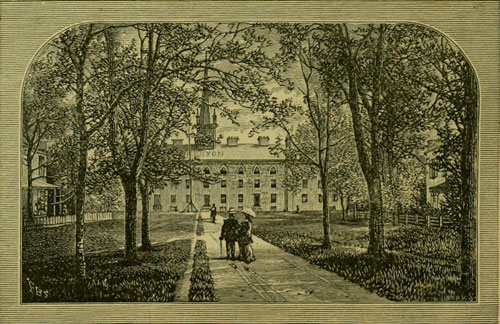
William entered Kenyon College, Gambier, OhioG, as a freshman in 1831.23 Kenyon is the oldest private college in Ohio, founded in 1824 by the Episcopal Church originally to train clergymen, but soon also became known as a liberal arts college.24
While there he joined the Philomathesian Society, the literary society at Kenyon. Literary societies were precursors to fraternities, providing libraries, debating exercises, and were the principal social outlet on campus.23 Members of the society engaged in debate on issues of the day, and with many students from southern states, the tensions between North and South leading up to the Civil War produced strong conflicts between members. On 23 Jun 1832 William and other southern members resigned from the society and founded the Nu Pi Kappa society.25,26
William graduated from Kenyon CollegeG on 6 Aug 1834, with a bachelor of arts degree. There were eight graduates, and each spoke at the commencement exercises. William gave two "orations," one entitled "The Medical Profession" and the other in Greek. He apparently returned and earned a master of arts degree in 1845.27,28,29
He secured his medical training in the Medical Department of the University of PennsylvaniaG in 1839 and 1840, graduating with an M. D. degree.30,31
William moved to the Southwest, presumably Huntsville, Alabama in 1840. He moved to New OrleansG in Jan 1841, staying until August.32,33 After passing an examination on 26 Apr 1841 in New OrleansG, he was admitted to practice medicine by the Comité Médical de la Nouvelle Orléans, also known as the Medical Board for the Eastern District of the State of Lousiana.34,35
He moved to Memphis, TennesseeG, in Jan 1842.36,37 A 6 Jan 1846 newspaper notice announced that he had relocated his office to Front Row, the street nearest the Mississippi River, over the book store of C. C. Cleaves.38 On 1 Feb 1848 he signed a contract with the Medical and Hospital Department of the U.S. Army to provide "medical attendance" in MemphisG. He was to receive $30 per month for his services.39
Dr. Tuck appears in the 1850 city directory of MemphisG, with his office shown as under the Gayoso House, a hotel. He appears in the 1855 directory with offices at the southeast corner of Shelby and Union, boarding at the Gayoso. He had an advertisement in that issue, stating his office was opposite the steamboat landing.40,41
He appeared on the 1850 Federal Census of Memphis, Shelby Co., TennesseeG, enumerated 5 Sep 1850, apparently boarding, along with another physician and his family, in the household of F. S. Latham, postmaster, and his family.42
In MemphisG was very active in public health, especially concerning yellow fever, which was a major health issue in the city. He published articles on that topic in the Southwestern Medical Advocate in 1847 and in the New Orleans Medical and Surgical Journal in 1854. He published four other articles on local health issues in these journals, the American Journal of Medical Science, and the Memphis Medical Recorder between 1845 and 1855.43,44,45 The Memphis Medical Society was organized in Jan 1851, and he was active in it. He participated in a discussion there with two other doctors in Jun 1852, and again in Jul 1853. He was appointed the Memphis Society's delegate to the Tennessee State Medical Society in 1854.46
It has been difficult to fully substantiate published claims that he organized the Board of Health and was first Public Health Officer in Memphis, although there seems to be at least some truth in them. A Board was first organized in 1838, several years before he arrived, but it apparently did not long remain in operation. After several efforts, a new board was established in Jul 1849 in response to a threat of cholera, and Dr. Tuck was appointed one of the six members. What role he played in re-organizing the new Board is not clear.47,48,49 He was appointed Secretary of the Memphis Board of Health in Oct 1852 and continued to serve until his death.50,51,52 He filled the chair of the Institutes of Medicine in the Memphis Medical College during the 1858-9 session.36
Surgeons in the U.S. Army had been recording weather observations since 1817 in an effort to determine what relationship there might be between disease and climate. Apparently William and the Memphis Board of Health shared that interest. He made daily recordings of barometric pressure, temperature, relative humidity, rainfall, and wind data in MemphisG. It was published monthly in the local newspaper. He also furnished monthly meteorological reports to the Smithsonian Institution from 1857 until his death in 1859.53,54
In addition to his professional duties, he was active in public service and in literature.
William served on the Board of Visitors (later known as the Board of Education) for the Memphis City Schools for the 1857-58 year.55 He authored a book, Selections for Sabbath Reading, and Brief Miscellaneous Essays, Moral and Religious, published in 1857. It consists of quotations and short articles, with chapters on such topics as "Nature of True Friendship," "Vital Piety," "Importance of Self-Knowledge," and "Thoughts to be Remembered." A whole chapter is based on quotations from George Washington and there are brief quotations from a variety of other figures, but many of the passages seem to be his writings.56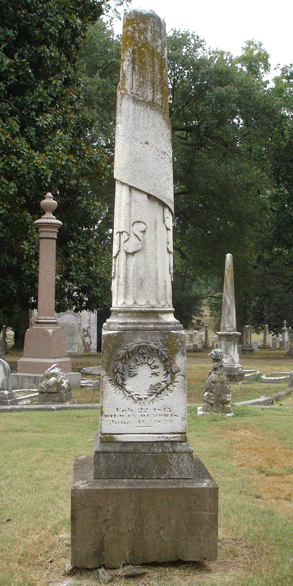
William appears to have lived well for his time, but seems to have difficulty managing his finances. On 5 Oct 1846 he signed a note due "on demand" for $344.77, for reasons not recorded, which remained unpaid at his death. His creditor was repeatedly assured it would repaid, including in the fall of 1857 when Dr. Tuck had returned from a trip to Virginia saying that he had paid off one or two similar debts there.57 A series of notes dated 1 May 1845, totaling $150 for payment of rent on his office on Main St. in MemphisG also remained unpaid at his death. However his former landlord's estate owed him $459.50, suggesting part of his financial problem was an inability to collect his accounts. After his death his administrator collected this account, $336.66 owed by the city, and $1,062 in smaller amounts owed by 29 other people, apparently all patients.58
Despite his debts, it appears he provided himself the things that were important to him. His library included 536 books, 212 of them medical texts, which sold after his death for $621. Thomas Henry McNeill, of Christian Co., Kentucky and Coahoma Co., Mississippi, husband of William's younger sister, purchased over half of them at the auction.59 He seemed to dress the part of a successful physician as well. At his death he had $233 in outstanding bills from clothiers, hatters, and boot shops.60
His furnishing included:
William died on 14 Jun 1859, at the home of his sister Elizabeth in Memphis, Shelby Co., TennesseeG, at age 44.7,8,9,10 He was buried on 14 Jun 1859 in Elmwood Cemetery, Memphis, Shelby Co., TennesseeG, in the family plot owned by his sister and her husband.11,12
William's brother-in-law, Quintus C. Atkinson, husband of his eldest sister Sarah, was appointed administrator of his estate at the July 1859 term of the Shelby Co.G court. He posted a $500 bond on 5 Jul 1859, having already taken an inventory of William's effects on 16 Jun. The inventory included the books, furnishings, household items, and a saddle horse. He had the books sold at an auction house, settled debts, and collected accounts due. The debts and costs amounted to $1,157, and the sale of the books and accounts collected totaled $2,650, leaving nearly $1,500 in cash in addition to the furniture, horse, and 51 shares of Memphis and Charleston Railroad in the estate.62
William was born with the surname Edmondson, and he seems to have used that through his college years. But soon after that he began using the surname Tuck. One source shows he had his surname changed to Tuck by act of the Virginia legislature. But no record of a legislative petition for him has been found, and the law was changed in 1839 specifying that name changes should be directed to the circuit court. A review of the order books for all the courts in Halifax Co. during that time period all found no record of such an order.3,13,14 Another source shows his given name as Joseph Jerome, one of which may have been the origin of his middle initial J.15
He was apparently adopted by Elizabeth and Dr. Davis Green Tuck, between 1820 and 1830, when he was apparently included in their household. The adoption was likely informal, as he continued to use his birth surname through college, but as adults he and their other children referred to each other as siblings. There were a number of Edmondson families in the area, but his birth parents have not been identified.16,17,18,19,20
William was probably one of the two males age 15 to 20 appearing on the 1830 Federal Census of Halifax Co., VirginiaG, in the household of his adoptive father.21
Attending College --- Text Stolen from ReigelRidge.com !! ---
Old Kenyon Hall
from W. B. Bodine, Kenyon College22
from W. B. Bodine, Kenyon College22
William entered Kenyon College, Gambier, OhioG, as a freshman in 1831.23 Kenyon is the oldest private college in Ohio, founded in 1824 by the Episcopal Church originally to train clergymen, but soon also became known as a liberal arts college.24
While there he joined the Philomathesian Society, the literary society at Kenyon. Literary societies were precursors to fraternities, providing libraries, debating exercises, and were the principal social outlet on campus.23 Members of the society engaged in debate on issues of the day, and with many students from southern states, the tensions between North and South leading up to the Civil War produced strong conflicts between members. On 23 Jun 1832 William and other southern members resigned from the society and founded the Nu Pi Kappa society.25,26
William graduated from Kenyon CollegeG on 6 Aug 1834, with a bachelor of arts degree. There were eight graduates, and each spoke at the commencement exercises. William gave two "orations," one entitled "The Medical Profession" and the other in Greek. He apparently returned and earned a master of arts degree in 1845.27,28,29
He secured his medical training in the Medical Department of the University of PennsylvaniaG in 1839 and 1840, graduating with an M. D. degree.30,31
Establishing a Medical Career --- Text Stolen from ReigelRidge.com !! ---
William moved to the Southwest, presumably Huntsville, Alabama in 1840. He moved to New OrleansG in Jan 1841, staying until August.32,33 After passing an examination on 26 Apr 1841 in New OrleansG, he was admitted to practice medicine by the Comité Médical de la Nouvelle Orléans, also known as the Medical Board for the Eastern District of the State of Lousiana.34,35
He moved to Memphis, TennesseeG, in Jan 1842.36,37 A 6 Jan 1846 newspaper notice announced that he had relocated his office to Front Row, the street nearest the Mississippi River, over the book store of C. C. Cleaves.38 On 1 Feb 1848 he signed a contract with the Medical and Hospital Department of the U.S. Army to provide "medical attendance" in MemphisG. He was to receive $30 per month for his services.39
Dr. Tuck appears in the 1850 city directory of MemphisG, with his office shown as under the Gayoso House, a hotel. He appears in the 1855 directory with offices at the southeast corner of Shelby and Union, boarding at the Gayoso. He had an advertisement in that issue, stating his office was opposite the steamboat landing.40,41
He appeared on the 1850 Federal Census of Memphis, Shelby Co., TennesseeG, enumerated 5 Sep 1850, apparently boarding, along with another physician and his family, in the household of F. S. Latham, postmaster, and his family.42
A Pioneer in Memphis Public Health --- Text Stolen from ReigelRidge.com !! ---
In MemphisG was very active in public health, especially concerning yellow fever, which was a major health issue in the city. He published articles on that topic in the Southwestern Medical Advocate in 1847 and in the New Orleans Medical and Surgical Journal in 1854. He published four other articles on local health issues in these journals, the American Journal of Medical Science, and the Memphis Medical Recorder between 1845 and 1855.43,44,45 The Memphis Medical Society was organized in Jan 1851, and he was active in it. He participated in a discussion there with two other doctors in Jun 1852, and again in Jul 1853. He was appointed the Memphis Society's delegate to the Tennessee State Medical Society in 1854.46
It has been difficult to fully substantiate published claims that he organized the Board of Health and was first Public Health Officer in Memphis, although there seems to be at least some truth in them. A Board was first organized in 1838, several years before he arrived, but it apparently did not long remain in operation. After several efforts, a new board was established in Jul 1849 in response to a threat of cholera, and Dr. Tuck was appointed one of the six members. What role he played in re-organizing the new Board is not clear.47,48,49 He was appointed Secretary of the Memphis Board of Health in Oct 1852 and continued to serve until his death.50,51,52 He filled the chair of the Institutes of Medicine in the Memphis Medical College during the 1858-9 session.36
Surgeons in the U.S. Army had been recording weather observations since 1817 in an effort to determine what relationship there might be between disease and climate. Apparently William and the Memphis Board of Health shared that interest. He made daily recordings of barometric pressure, temperature, relative humidity, rainfall, and wind data in MemphisG. It was published monthly in the local newspaper. He also furnished monthly meteorological reports to the Smithsonian Institution from 1857 until his death in 1859.53,54
In addition to his professional duties, he was active in public service and in literature.
William served on the Board of Visitors (later known as the Board of Education) for the Memphis City Schools for the 1857-58 year.55 He authored a book, Selections for Sabbath Reading, and Brief Miscellaneous Essays, Moral and Religious, published in 1857. It consists of quotations and short articles, with chapters on such topics as "Nature of True Friendship," "Vital Piety," "Importance of Self-Knowledge," and "Thoughts to be Remembered." A whole chapter is based on quotations from George Washington and there are brief quotations from a variety of other figures, but many of the passages seem to be his writings.56
Financial Issues, But Living Well --- Text Stolen from ReigelRidge.com !! ---
Dr. Tuck's Tombstone
photo courtesy Elmwood cemetery
photo courtesy Elmwood cemetery
William appears to have lived well for his time, but seems to have difficulty managing his finances. On 5 Oct 1846 he signed a note due "on demand" for $344.77, for reasons not recorded, which remained unpaid at his death. His creditor was repeatedly assured it would repaid, including in the fall of 1857 when Dr. Tuck had returned from a trip to Virginia saying that he had paid off one or two similar debts there.57 A series of notes dated 1 May 1845, totaling $150 for payment of rent on his office on Main St. in MemphisG also remained unpaid at his death. However his former landlord's estate owed him $459.50, suggesting part of his financial problem was an inability to collect his accounts. After his death his administrator collected this account, $336.66 owed by the city, and $1,062 in smaller amounts owed by 29 other people, apparently all patients.58
Despite his debts, it appears he provided himself the things that were important to him. His library included 536 books, 212 of them medical texts, which sold after his death for $621. Thomas Henry McNeill, of Christian Co., Kentucky and Coahoma Co., Mississippi, husband of William's younger sister, purchased over half of them at the auction.59 He seemed to dress the part of a successful physician as well. At his death he had $233 in outstanding bills from clothiers, hatters, and boot shops.60
His furnishing included:
| mahogany secretary | table and book case |
| mahogany book case | walnut center table |
| walnut book case | long square table |
| open book case | three chairs |
| poplar ward robe | small table |
| square polar ward robe | eight-day clock |
| single bed stead with shuck and cotton mattress.61 | |
William's brother-in-law, Quintus C. Atkinson, husband of his eldest sister Sarah, was appointed administrator of his estate at the July 1859 term of the Shelby Co.G court. He posted a $500 bond on 5 Jul 1859, having already taken an inventory of William's effects on 16 Jun. The inventory included the books, furnishings, household items, and a saddle horse. He had the books sold at an auction house, settled debts, and collected accounts due. The debts and costs amounted to $1,157, and the sale of the books and accounts collected totaled $2,650, leaving nearly $1,500 in cash in addition to the furniture, horse, and 51 shares of Memphis and Charleston Railroad in the estate.62
Citations
- [S1280] Wm. J. Tuck, Wm. J. tombstone, Elmwood Cemetery, shows name as Wm J. Tuck.
- [S4110] W. H. Rainey & Co.'s Memphis City Directory and for 1855 & 6, pg178, shows name as Tuck, Wm J, physician, pg 233 shows name as Wm. J. Tuck, M. D.
- [S4461] History of the Philomathesian Society, pg 26, shows name as William J. (Edmondson) Tuck and that his name was changed to Tuck by act of the Legislature of Virginia.
- [S1280] Wm. J. Tuck, Wm. J. tombstone, Elmwood Cemetery, shows date, with year as 1815, county and state.
- [S2135] Walker, "Death of Prof. W. J. Tuck," pg 190, shows date, with year as 1814, county and state.
- [S1519] F. S. Latham household, 1850 U.S. Census, Shelby Co., Tennessee, shows age 31 and state.
- [S1280] Wm. J. Tuck, Wm. J. tombstone, Elmwood Cemetery, shows date, as 14 Jun 1859, and city.
- [S2135] Walker, "Death of Prof. W. J. Tuck," pg 190, shows date, as 14 Jun, and city.
- [S2134] "Death of Dr. W. J. Tuck," Memphis Daily Appeal, 16 Jun 1859, shows he died suddenly Monday night [16 Jun 1859 was a Thursday; Monday was the 13th.].
- [S2111] McNeil et al, Malcolm v. Mills, J. C.;Young, R. A, transcript of proceedings of Circuit Court of Shelby Co., 12 Aug 1885, pg 486, cross-examination of Richard Tuck, shows he said Dr. Tuck died in Memphis, he heard at "sister's."
- [S4112] Elmwood Cemetery, burial records, 1859 pg 37, shows date, lot 299.
- [S1280] Wm. J. Tuck, Wm. J. tombstone, Elmwood Cemetery.
- [S4469] Registre du Comité Médical de la Nell Orléans, pg 127, shows name as William J. Edmondson alias Wm. J. Tuck.
- [S225] A review of the indexes for order books for the Circuit Superior Court of Law and Chancery for Halifax Co. and the minute books of the Halifax County Court, and a page-by-page review of those books and the minute books of the Halifax County Court of Law and Chancery the years 1839 through 1842, all found no record of a name change order for him.
- [S2061] Macon, John and Edward Tuck of Halifax County, pg 29.
- [S1038] Owen Family Bible, lists Sarah, b. 1818, Rebecca, b. 1824, and Walter, b. 1824, among the grandchildren of Adam and Sarah Toot born as late as 1834, but does not include William J.
- [S636] Davis G. Tuck household, 1820 U.S. Census, Halifax Co., Virginia, shows no males under age 10.
- [S635] Davis G. Tuck household, 1830 U.S. Census, Halifax Co., Virginia, shows two white males age 15 to 20 in the household.
- [S2111] McNeil et al, Malcolm v. Mills, J. C.;Young, R. A, transcript of proceedings of Circuit Court of Shelby Co., 12 Aug 1885, pg 442, testimony, of Richard Tuck, shows he responded yes to the question "Did you have a brother who was a physician in Memphis.
- [S4401] Pictorial Life of Benjamin Franklin, includes inscription "Christmas Present to Walter S. Tuck from his affectionate brother Wm. J. Tuck, Dec 17th 1846."
- [S635] Davis G. Tuck household, 1830 U.S. Census, Halifax Co., Virginia.
- [S4462] [W. B. Bodine], Kenyon College.
- [S4461] History of the Philomathesian Society, pg 26.
- [S1265] Wikipedia, online, article "Kenyon College" viewed Dec 2013, give college background.
- [S4463] KCpedia, online, article "Philomathesian Society" viewed Jan 2014.
- [S4461] History of the Philomathesian Society, pg 26, shows his resignation.
- [S4395] "Kenyon College, Ohio," Boston Recorder, 29 Aug 1834, shows date, degree as A. B., list of orations.
- [S4394] Committee of the Board of Trustees, Statement of Facts, pg 387, shows him in list of alumni, year, and with A.M. degree.
- [S4461] History of the Philomathesian Society, pg 26, shows he graduated in 1835, and received a master's degree in 1845.
- [S2724] "University of Pennsylvania Medical Department Matriculants", pg 20, surnames beginning with "T," shows him in 1840 and that he received an M. D. degree.
- [S2132] Bruesch, "Early Medical History of Memphis," pg 57, citing W. J. Tuck, "An Essay on Yellow Fever," New Orleans Medical and Surgical Journal, II, 175-191, 1846, shows received his medical training in Philadelphia in the winters of 1839 and 1840, and summer of 1840.
- [S2132] Bruesch, "Early Medical History of Memphis," pg 57.
- [S2135] Walker, "Death of Prof. W. J. Tuck," pg 190, shows he removed to New Orleans Jan 1841 and stayed until August.
- [S4469] Registre du Comité Médical de la Nell Orléans, pg 127.
- [S4396] "List of Physicians," The Times-Picayune, 4 Jun 1847, shows him as admitted.
- [S2135] Walker, "Death of Prof. W. J. Tuck," pg 190.
- [S2132] Bruesch, "Early Medical History of Memphis," pg 57, shows he moved to Memphis after New Orleans.
- [S2660] "Palmyra Village Cemetery Update", citing Memphis Daily Eagle 6 Jan 1846.
- [S2720] United States Congressional Serial Set, House Doc. No. 38, 31st Congress, 1st session, Contracts under Authority of the War Department, 5 Feb 1850, pg 43.
- [S4109] Twyman's Memphis Directory, 1850, pg 39.
- [S4110] W. H. Rainey & Co.'s Memphis City Directory and for 1855 & 6, pp 178, 233.
- [S1519] F. S. Latham household, 1850 U.S. Census, Shelby Co., Tennessee, shows him in household of F. S. Latham, with apparently his wife and three children, Mrs. Davis, age 65, and a physician Richards and apparently his wife and two young children.
- [S2132] Bruesch, "Early Medical History of Memphis," pg 57, describes his work in Memphis and lists the six articles he published.
- [S1519] F. S. Latham household, 1850 U.S. Census, Shelby Co., Tennessee, shows occupation as physician.
- [S2111] McNeil et al, Malcolm v. Mills, J. C.;Young, R. A, transcript of proceedings of Circuit Court of Shelby Co., 12 Aug 1885, pg 485-6, cross-examination of Richard Tuck, shows he said Dr. Tuck was a practicing physician in Memphis, and that he understood Dr. Tuck "stood high" in his profession.
- [S2132] Bruesch, "Early Medical History of Memphis," pg 69-70, citing Memphis Medical Recorder I:8 (1852) and II:299-312 (1854) and New Orleans Medical and Surgical Journal IX:148-152 (1852) describes organization of Medical Society and Tuck's participation.
- [S2061] Macon, John and Edward Tuck of Halifax County, pg 29, shows he organized the Board of Health and was first Public Health Officer in Memphis.
- [S2132] Bruesch, "Early Medical History of Memphis," pg 47, citing the Memphis Enquirer 11 Aug 1837 [probably actually 1838], shows that the corporation of Memphis created the Board of Health on 6 Aug 1938 [no doubt actually 1838]; pg 48, shows no bulletins issued by the Board after 15 Oct of that year and probably ceased functioning; pg 58, shows earlier Board soon suspended its activities, and citing Keating, History of Memphis, (Syracuse: 1888), pg 299, shows Tuck and others appointed July 30 1850, but then recites entries from city council minutes of resolutions passed Jun 1840 and 25 Jun 1841 to form a board, 24 Mar 1848 appointments of seven physicians not including Tuck, and July 25 1849 establishing a Board of Health.
- [S2133] Keating, History of the City of Memphis Tennessee, pg 299, shows Drs. Shanks, Means, Booth, Hopson, Tuck, and Murphy appointed to form a board of health by Mayor Hickman 30 July, with no year, but context indicates it was 1849.
- [S2135] Walker, "Death of Prof. W. J. Tuck," pg 190, shows he was appointed to the Board in Oct 1852, acting as such except for a brief intermission until his death.
- [S2133] Keating, History of the City of Memphis Tennessee, pg 366 shows Tuck as secretary of the board of health reporting on deaths from yellow fever.
- [S2134] "Death of Dr. W. J. Tuck," Memphis Daily Appeal, 16 Jun 1859, shows he "has been" the Secretary of the Board of Health for several years.
- [S4392] United States Congressional Serial Set, Senate Doc. No. 130, 43rd Congress, 1st session, Annual Report of the Board of Regents of the Smithsonian Institution for the Year 1873.
- [S4399] Conner, "History of Weather Observations, Memphis", pp 28-9.
- [S4398] Asearchin' News, vol 44 no 4 (Winter 1997) pg 42, transcribed from 19 Oct 1857 Memphis Evening Ledger.
- [S4400] Tuck, Selections for Sabbath Reading.
- [S4141] Tuck, Dr. W. J., Shelby Co. Tennessee loose probate records, statement of J. Henry A. Lownes 29 Dec 1859.
- [S4141] Tuck, Dr. W. J., Shelby Co. Tennessee loose probate records, four notes dated 1 May 1845; and administrator's settlement statement.
- [S4141] Tuck, Dr. W. J., Shelby Co. Tennessee loose probate records, administrator's inventory 16 Jun 1859; and list of book sales.
- [S4141] Tuck, Dr. W. J., Shelby Co. Tennessee loose probate records, administrator's settlement statement and individual bills.
- [S4141] Tuck, Dr. W. J., Shelby Co. Tennessee loose probate records, administrator's inventory 16 Jun 1859.
- [S4141] Tuck, Dr. W. J., Shelby Co. Tennessee loose probate records, bond 5 Jul 1859; administrator's inventory 16 Jun 1859; and settlement statement.
Quintus Cincinnatus Atkinson1,2,3
#1856, (1840 - 1894)
Parents
| Father | Joshua Atkinson (ca. 1820 - 1846) |
| Mother | Elizabeth A. Watkins |
| Family Indexes | The Dutt/Toot Family The Tuck Family |
Key Events:
Copyright Notice
The material on this website is subject to copyright.
Facts – names, dates, and places – cannot be copyrighted; you are free to copy them.
But the narratives are my creative work product and are copyrighted. You may copy them for your personal use, but please respect my copyright and do not republish them in any form, including copying them to your tree on Ancestry or elsewhere, unless you have obtained written permission from me.
Many of the images are also copyrighted, and may not be copied without the consent of the copyright holders.
Narrative:
Quintus Cincinnatus Atkinson was born on 1 Apr 1840 in New Providence, Montgomery Co., TennesseeG.4,5,6
He was probably the male under age 5 listed in the household of his father, Joshua Atkinson, in the 1840 Federal Census of Montgomery Co., TennesseeG.14
His father died in 1846, when Quintus was about 6 years old.15,16
Quintus appeared on the 1850 Federal Census of Todd Co., KentuckyG, enumerated 11 Sep 1850, in the household of Betsy A. Walkins, age 63, who seems likely to have been his maternal grandmother. Also in the household was Elizabeth Sale, age 30, who may have been his mother, but if she had remarried no record has been found.17
R. S. Moore was named Quintus's legal guardian at the Mar 1851 term of Montgomery Co. court, and made a $7,000 bond. In the same session he reported he had received $3,288 from the estate of the boy's father.18
His guardian filed a report dated 1 Jan 1855, in which he reported he had earned interest of $863, and had expenses of $161, including medical bills to two different doctors totaling $44, and his fee of $100. This left a balance of $3,890.19
His guardian filed his final report dated 1 Mar 1859, in which he reported he had earned an additional $1,036 in interest, and had expenses of $82, including $20 for college tuition and $25 cash advanced to the boy. This left a balance of $4,944, which he had paid to his ward.20
He enlisted in Company A, 49th Tennessee Infantry 29 Nov 1861, and was discharged because of disability 24 Dec 1862.21,22
He was named an heir in the will of his half-uncle, Quintus C. Atkinson, dated 7 Jan 1864 in Shelby Co., TennesseeG, in which he was left $500.23
Quintus married Sarah E. McKoin, daughter of John G. McKoin and Mary J., on 12 Feb 1865 in Russellville, KentuckyG, Rev. W. Morrison officiating. They and their wedding party took the train from Clarksville to be married in Kentucky because marriage licenses could not be obtained in Federally occupied Clarksville, returning the same evening for supper.7,8,9
He was in the furniture business for some 25 years, until illness forced his retirement.24,25,26
Quintus and Sarah appeared on the 1870 Federal Census of Clarksville, Montgomery Co., TennesseeG, enumerated 24 Jun 1870, reporting real estate valued at $5000 and personal estate of $5000. Their children Quintus, T., and Lela were listed as living with them.3
Quintus and Sarah appeared on the 1880 Federal Census of Clarksville, Montgomery Co., Tennessee G, enumerated 14 Jun 1880. Their children Quintus, T., Lela, John, Sherwood, and Block were listed as living with them.27
Quintus died on 6 Jan 1894, at his home on Franklin St., Clarksville, TennesseeG, at age 53, after being bedridden for nearly fifteen years with a long illness.10,11 He was buried in Greenwood Cemetery, Clarksville, Montgomery Co., TennesseeG.12,13
He was probably the male under age 5 listed in the household of his father, Joshua Atkinson, in the 1840 Federal Census of Montgomery Co., TennesseeG.14
His father died in 1846, when Quintus was about 6 years old.15,16
Quintus appeared on the 1850 Federal Census of Todd Co., KentuckyG, enumerated 11 Sep 1850, in the household of Betsy A. Walkins, age 63, who seems likely to have been his maternal grandmother. Also in the household was Elizabeth Sale, age 30, who may have been his mother, but if she had remarried no record has been found.17
R. S. Moore was named Quintus's legal guardian at the Mar 1851 term of Montgomery Co. court, and made a $7,000 bond. In the same session he reported he had received $3,288 from the estate of the boy's father.18
His guardian filed a report dated 1 Jan 1855, in which he reported he had earned interest of $863, and had expenses of $161, including medical bills to two different doctors totaling $44, and his fee of $100. This left a balance of $3,890.19
His guardian filed his final report dated 1 Mar 1859, in which he reported he had earned an additional $1,036 in interest, and had expenses of $82, including $20 for college tuition and $25 cash advanced to the boy. This left a balance of $4,944, which he had paid to his ward.20
He enlisted in Company A, 49th Tennessee Infantry 29 Nov 1861, and was discharged because of disability 24 Dec 1862.21,22
He was named an heir in the will of his half-uncle, Quintus C. Atkinson, dated 7 Jan 1864 in Shelby Co., TennesseeG, in which he was left $500.23
Quintus married Sarah E. McKoin, daughter of John G. McKoin and Mary J., on 12 Feb 1865 in Russellville, KentuckyG, Rev. W. Morrison officiating. They and their wedding party took the train from Clarksville to be married in Kentucky because marriage licenses could not be obtained in Federally occupied Clarksville, returning the same evening for supper.7,8,9
He was in the furniture business for some 25 years, until illness forced his retirement.24,25,26
Quintus and Sarah appeared on the 1870 Federal Census of Clarksville, Montgomery Co., TennesseeG, enumerated 24 Jun 1870, reporting real estate valued at $5000 and personal estate of $5000. Their children Quintus, T., and Lela were listed as living with them.3
Quintus and Sarah appeared on the 1880 Federal Census of Clarksville, Montgomery Co., Tennessee G, enumerated 14 Jun 1880. Their children Quintus, T., Lela, John, Sherwood, and Block were listed as living with them.27
Quintus died on 6 Jan 1894, at his home on Franklin St., Clarksville, TennesseeG, at age 53, after being bedridden for nearly fifteen years with a long illness.10,11 He was buried in Greenwood Cemetery, Clarksville, Montgomery Co., TennesseeG.12,13
Research Note, 25 Feb 2009:
Quintus Cincinnatus Atkinson, born in 1840, has in some accounts been confused with his half uncle, Quintus C. Atkinson, who was born about 1810. It is the younger Quintus who served in the Civil War, married Sarah McKoin, remained in Clarksville, and is buried in Greenwood Cemetery there. The elder Quintus lived in Clarksville when he was young, but moved to Memphis and prospered there. He married first Arabella West, then Sarah Tuck, and is buried in Elmwood Cemetery in Memphis.
Children:
Children with Sarah E. McKoin:
- Quintus C. Atkinson Jr. (ca. 1866 - 2 Aug 1954)
- T. Walton Atkinson (ca. 1868 - Bef 1911)
- Lela Atkinson (4 Mar 1869 - 29 Mar 1947)
- John Graham Atkinson (ca. 1872 - )
- Sherwood Atkinson (ca. 1876 - )
- Block Atkinson (ca. May 1880 - )
- Fisher M. Atkinson (10 May 1883 - 24 Apr 1914)
Citations
- [S1269] Sallie Atkinson, Tennessee Widow's Indigent Pension, shows name as Quintus Cincinnatus Atkins.
- [S1226] Betsy A. Watkins household, 1850 U.S. Census, Todd Co., Kentucky, shows name as Quintus Atkinson.
- [S1773] Q. C. Atkinson household, 1870 U.S. Census, Montgomery Co., Tennessee.
- [S1269] Sallie Atkinson, Tennessee Widow's Indigent Pension, shows date, county, and state.
- [S1286] "Q. C. Atkinson Sr. ... Expires," Daily Tobacco Leaf-Chronicle, 6 Jan 1894, shows town and about age 54.
- [S1226] Betsy A. Watkins household, 1850 U.S. Census, Todd Co., Kentucky, shows age 10 and state.
- [S1288] Beach, Along the Warioto, pg 218, shows date, town, state, and gives details of train trip and reasons.
- [S1269] Sallie Atkinson, Tennessee Widow's Indigent Pension, shows date as fall of 1865, town, state, and officiant.
- [S1773] Q. C. Atkinson household, 1870 U.S. Census, Montgomery Co., Tennessee, shows them apparently living as husband and wife.
- [S1286] "Q. C. Atkinson Sr. ... Expires," Daily Tobacco Leaf-Chronicle, 6 Jan 1894, shows at his residence, address, "this morning at 8 o'clock," and illness.
- [S1269] Sallie Atkinson, Tennessee Widow's Indigent Pension, shows date, and city.
- [S646] Montgomery County, Tennessee Genealogy Website, online, War Records, Civil War section, shows name, regiment, and section 3.
- [S500] Findagrave.com, online, memorial #6717710, Pvt Quintus C. Atkinson, shows section and plot.
- [S1332] Joshua Atkinson household, 1840 U.S. Census, Montgomery Co., Tennessee.
- [S8704] Will Books, Montgomery Co., Tennessee, K:239-240, adminstrator's bond of Q. C. Atkinson, Jul 1846 term; K:250, letters of administration for estate of Joshua Atkinson.
- [S8704] Will Books, Montgomery Co., Tennessee, P:711-3, will of T. W. Atkinson, May 1865 term, shows his share of his estate to go to his representatives.
- [S1226] Betsy A. Watkins household, 1850 U.S. Census, Todd Co., Kentucky.
- [S8704] Will Books, Montgomery Co., Tennessee, M:216, guardian's bond of Q. C. Atkinson, Mar term 1851; M:228, guardian's report, same term.
- [S8704] Will Books, Montgomery Co., Tennessee, N:584, guardian's report, Sep 1855 term.
- [S8704] Will Books, Montgomery Co., Tennessee, P:74-5, guardian's report, Mar 1857 term.
- [S1269] Sallie Atkinson, Tennessee Widow's Indigent Pension, shows unit, dates of enlistment, and cause of discharge.
- [S646] Montgomery County, Tennessee Genealogy Website, online, War Records, Civil War section, shows name and regiment.
- [S1285] Wills, Shelby Co., Tennessee, 4:32-38, Q. C. Atkinson, 1865.
- [S1773] Q. C. Atkinson household, 1870 U.S. Census, Montgomery Co., Tennessee, shows occupation as furniture dealer.
- [S1901] Q. C. Atkinson household, 1880 U.S. Census, Montgomery Co., Tennessee, shows occupation as merchant.
- [S1286] "Q. C. Atkinson Sr. ... Expires," Daily Tobacco Leaf-Chronicle, 6 Jan 1894, shows was in the furniture business for some 25 years, successful until taken ill.
- [S1901] Q. C. Atkinson household, 1880 U.S. Census, Montgomery Co., Tennessee.
Emma Williams1,2,3
#1860, (1849 - 1903)
Parents
| Father | Col. Beverly Dickerson Williams (4 Jul 1822 - 22 Feb 1907) |
| Mother | Narcissa B. Mitchell (ca. 1818 - 1868) |
| Chart Membership | Descendants of David Dutt/Toot Descendants of Dr. Davis Green Tuck |
| Family Indexes | The Dutt/Toot Family The Tuck Family |
Key Events:
Death: 1 Jun 1903, 1698 Monroe Extended, Memphis, Shelby Co., Tennessee,10
Copyright Notice
The material on this website is subject to copyright.
Facts – names, dates, and places – cannot be copyrighted; you are free to copy them.
But the narratives are my creative work product and are copyrighted. You may copy them for your personal use, but please respect my copyright and do not republish them in any form, including copying them to your tree on Ancestry or elsewhere, unless you have obtained written permission from me.
Many of the images are also copyrighted, and may not be copied without the consent of the copyright holders.
Narrative:
Emma Williams was born on 17 Mar 1849 in KentuckyG.4,5,6 Her formal name was evidently Sarah Emma, but she was universally known as Emma, which was used even on her tombstone.13,14,15
She appeared on the 1850 Federal Census of Boyle Co., KentuckyG, in the household of her parents, Col. Beverly Dickerson Williams and Narcissa B. Mitchell.16,17 She appeared on the 1860 Federal Census of Boyle Co., KentuckyG, in the household of her parents.18
Her mother died in 1868, when Emma was about 19 years old.19
Emma was named an heir in the will of James P. Mitchell, her late mother's father, dated 15 Oct 1870 in Boyle Co., KentuckyG, to receive $1,000, as were her three siblings.20
Emma married Adam Paul Tuck, son of Dr. Davis Green Tuck and Elizabeth M. Toot, on 20 Oct 1870 in Boyle Co., KentuckyG.7,8,9
Emma and Paul lived in MemphisG from the time they were married, in Oct 1870, except for a period from 1875 to 1878 when they lived in St. Louis.21
Her grandfather's will was proved on 5 Jul 1871. However the heirs contested it, and agreed to probating it after all the heirs signed an agreement making major changes in the distribution of the assets. Under the agreement Emma and her siblings were to each receive one-quarter of their late mother's share, less any amounts that had been advanced to her or to them, instead of the fixed $1,000.22
Emma received a distribution of $506 from her grandfather's estate, as reported in the first settlement report for the estate, which was filed 5 Nov 1873.23 The second settlement report for the estate, which was filed 15 Oct 1875, showed Emma received a second distribution, of $975.24 The final settlement report for the estate, filed 20 Jan 1883, showed that she had received a further distribution of $98.25 A settlement report for the was filed 16 Nov 1891, after the death of her grandfather's second wife, showed she had received a final distribution of $125.26
Emma and Paul appeared on the 1880 Federal Census of Memphis, Shelby Co., Tennessee, at 291 Linden St. G, enumerated 10 Jun 1880. Their children Narcissa and Elizabeth were listed as living with them, as was Olly Harden, age 18, a servant.27
In Nov 1881 Emma began to nurse her sister-in-law, Sarah Elizabeth Atkinson, going to her house several times a week. In Aug 1882 she moved in with her sister-in-law to nurse her full time until she died 2 Nov 1882.28,29
Emma and Paul appeared on the 1900 Federal Census of Memphis, Shelby Co., Tennessee G, in the household of their daughter Elizabeth and her husband, John Ripley Greer.30
Her husband died on 25 Sep 1900 in 291 Linden St., Memphis, Shelby Co., TennesseeG.31,32,33
Emma died on 1 Jun 1903 at her home, 1698 Monroe Extended, Memphis, Shelby Co., TennesseeG, at age 54.10 She was buried on 2 Jun 1903 in Elmwood Cemetery, Memphis, Shelby Co., TennesseeG, in the lot owned by her husband's sister, Sarah, and her husband.11,12
She appeared on the 1850 Federal Census of Boyle Co., KentuckyG, in the household of her parents, Col. Beverly Dickerson Williams and Narcissa B. Mitchell.16,17 She appeared on the 1860 Federal Census of Boyle Co., KentuckyG, in the household of her parents.18
Her mother died in 1868, when Emma was about 19 years old.19
Emma was named an heir in the will of James P. Mitchell, her late mother's father, dated 15 Oct 1870 in Boyle Co., KentuckyG, to receive $1,000, as were her three siblings.20
Emma married Adam Paul Tuck, son of Dr. Davis Green Tuck and Elizabeth M. Toot, on 20 Oct 1870 in Boyle Co., KentuckyG.7,8,9
Emma and Paul lived in MemphisG from the time they were married, in Oct 1870, except for a period from 1875 to 1878 when they lived in St. Louis.21
Her grandfather's will was proved on 5 Jul 1871. However the heirs contested it, and agreed to probating it after all the heirs signed an agreement making major changes in the distribution of the assets. Under the agreement Emma and her siblings were to each receive one-quarter of their late mother's share, less any amounts that had been advanced to her or to them, instead of the fixed $1,000.22
Emma received a distribution of $506 from her grandfather's estate, as reported in the first settlement report for the estate, which was filed 5 Nov 1873.23 The second settlement report for the estate, which was filed 15 Oct 1875, showed Emma received a second distribution, of $975.24 The final settlement report for the estate, filed 20 Jan 1883, showed that she had received a further distribution of $98.25 A settlement report for the was filed 16 Nov 1891, after the death of her grandfather's second wife, showed she had received a final distribution of $125.26
Emma and Paul appeared on the 1880 Federal Census of Memphis, Shelby Co., Tennessee, at 291 Linden St. G, enumerated 10 Jun 1880. Their children Narcissa and Elizabeth were listed as living with them, as was Olly Harden, age 18, a servant.27
In Nov 1881 Emma began to nurse her sister-in-law, Sarah Elizabeth Atkinson, going to her house several times a week. In Aug 1882 she moved in with her sister-in-law to nurse her full time until she died 2 Nov 1882.28,29
Emma and Paul appeared on the 1900 Federal Census of Memphis, Shelby Co., Tennessee G, in the household of their daughter Elizabeth and her husband, John Ripley Greer.30
Her husband died on 25 Sep 1900 in 291 Linden St., Memphis, Shelby Co., TennesseeG.31,32,33
Emma died on 1 Jun 1903 at her home, 1698 Monroe Extended, Memphis, Shelby Co., TennesseeG, at age 54.10 She was buried on 2 Jun 1903 in Elmwood Cemetery, Memphis, Shelby Co., TennesseeG, in the lot owned by her husband's sister, Sarah, and her husband.11,12
Children:
Children with Adam Paul Tuck:
- Narcissa Tuck (30 Jul 1872 - 2 Mar 1944)
- Elizabeth Tuck+ (ca. 31 Oct 1874 - 9 Apr 1931)
Citations
- [S8895] Beverly D. Williams household, 1850 U.S. Census, Boyle Co., Kentucky, shows name as Emily Williams.
- [S1283] Q. C. & Sarah E. Atkinson family monument, Elmwood Cemetery, has "Emma Williams" inscribed on the base of the monument, adjacent to her husband's inscription.
- [S8894] Marriage Bonds, Boyle Co., Kentucky, 6:92, A. P. Tuck and Sarah Emma Williams.
- [S8895] Beverly D. Williams household, 1850 U.S. Census, Boyle Co., Kentucky, shows age 2 and state.
- [S8897] B. D. Williams household, 1860 U.S. Census, Boyle Co., Kentucky, shows age 11 and state.
- [S1283] Q. C. & Sarah E. Atkinson family monument, Elmwood Cemetery, has date and state inscribed on the base of the monument below her name.
- [S8894] Marriage Bonds, Boyle Co., Kentucky, 6:92, A. P. Tuck and Sarah Emma Williams, shows bond date.
- [S2111] McNeil et al, Malcolm v. Mills, J. C.;Young, R. A, transcript of proceedings of Circuit Court of Shelby Co., 12 Aug 1885, pg 109, deposition of Mrs. Emma W. Tuck, gave date.
- [S1220] Paul Tuck household, 1880 U.S. Census, Shelby Co., Tennessee, shows married.
- [S1274] Emma Williams Tuck, Burial Permit, shows date, address, and same address as her residence.
- [S4112] Elmwood Cemetery, burial records, 1903 pg 176, shows date, lot 299, grave 12.
- [S1274] Emma Williams Tuck, Burial Permit, shows cemetery.
- [S893] "Kentucky Marriages, 1851-1900," Ancestry.com, record for A. P. Tuck and Sarah Emma Williams.
- [S8897] B. D. Williams household, 1860 U.S. Census, Boyle Co., Kentucky, shows name as S. E. Williams.
- [S1220] Paul Tuck household, 1880 U.S. Census, Shelby Co., Tennessee, shows name as Emma Tuck.
- [S8895] Beverly D. Williams household, 1850 U.S. Census, Boyle Co., Kentucky.
- [S8904] Beverly D. Williams, owner, 1850 U.S. Census, Boyle Co., Kentucky, slave schedule.
- [S8897] B. D. Williams household, 1860 U.S. Census, Boyle Co., Kentucky.
- [S8898] Biographical and Historical Memoirs: Arkansas, pg 519.
- [S8915] Wills, Boyle Co., Kentucky, 2:88-91, will of James P. Mitchell, 5 Jul 1871.
- [S2111] McNeil et al, Malcolm v. Mills, J. C.;Young, R. A, transcript of proceedings of Circuit Court of Shelby Co., 12 Aug 1885, pg 109, deposition of Mrs. Emma W. Tuck, stated they lived in Memphis expect for about three years in St. Louis from 1876 through part of 1878, pg 146 corrected that to say she went to St. Louis in Dec 1874.
- [S8915] Wills, Boyle Co., Kentucky, 2:88-91, will of James P. Mitchell, 5 Jul 1871; 2:92-3, agreement of the heirs, same date.
- [S8916] Settlements, Boyle Co., Kentucky, 3:509-12, estate of James P. Mitchell, 15 Dec 1873.
- [S8916] Settlements, Boyle Co., Kentucky, 3:620-3, estate of James P. Mitchell, 7 Oct 1875.
- [S8916] Settlements, Boyle Co., Kentucky, 4:536-7, estate of James P. Mitchell, 19 Mar 1883.
- [S8916] Settlements, Boyle Co., Kentucky, 5:396-7, estate of James P. Mitchell, 16 Nov 1891.
- [S1220] Paul Tuck household, 1880 U.S. Census, Shelby Co., Tennessee.
- [S1351] Atkinson, Sarah E., Shelby Co. Tennessee loose probate records, claim of Dr. Farzier T. Henning, paid 6 Feb 1883, itemizes visits; Statement of executors 27 Nov 1883 shows payment.
- [S2111] McNeil et al, Malcolm v. Mills, J. C.;Young, R. A, transcript of proceedings of Circuit Court of Shelby Co., 12 Aug 1885, pg 110, deposition of Mrs. Emma W. Tuck, describes her nursing duties; pg 112, admits Sarah was conducting her normal activities until Jul 1882; and pg 166-9, deposition of Mrs. M. W. Bacon, states Sarah took ill in Oct 1881, didn't leave the yard after 6 Jul 1882, and was worse after 31 Aug.
- [S1221] John Ripley Greer household, 1900 U.S. Census, Shelby Co., Tennessee.
- [S4133] A. P. Tuck, Register of Deaths, shows date and address.
- [S1278] "Died - Tuck," The Commercial Appeal, 26 Sep 1900, shows date, address, and at his home.
- [S4122] R. L. Polk & Co.'s Memphis Directory, 1901 pg 995, shows date.
We encourage you to use
the "Contact Us" link below if you are interested in the people shown on this page or
to inquire about people in related lines not included. Basic information on many more
people we are in the process of researching can be found in our Outline Section. Please
see the Main Page for details.
|
||
If the "Contact Us" link doesn't work for you, manually email this address:  |
||
Compiler: Terry Reigel
Page created by John Cardinal's GedSite v5.12.02